September 2025
Aug 14, 2026ListsOffice carry is an exercise in minimal viability
Sep 2025OpinionWhy Chinese-made knives aren't what they were, and why people still pretend otherwise
October 2025
Oct 2025GuidesThe pocket clip is the most underrated spec, here's how to read one, here's how to read one
November 2025
Nov 2025ListsCold weather carry: 5 folders that work with gloves
Nov 2025ListsHoliday gift guide: the best EDC knives under $75
Nov 2025ListsHoliday gift guide: the best EDC knives under $150
December 2025
Dec 2025ListsHoliday gift guide: serious carry under $250
Dec 2025OpinionThe steel upgrade trap: when spending more on blade steel stops making sense
Dec 2025OpinionYear in carry: what we actually had in our pockets in 2025
January – April 2026
Jan 2026SpotlightVosteed maker spotlight: the brand that's quietly winning
Jan 2026GuidesHow to sharpen a folder: the minimal setup that actually works
Feb 2026Opinion5 knives that replaced my Benchmade, and why I haven't looked back, and why I haven't looked back
Feb 2026SpotlightKnafs maker spotlight: Ben Petersen and the community-first knife brand: Ben Petersen and the community-first knife brand
Mar 2026ListsBest CJRB knives ranked: AR-RPM9 deserves its own conversation
Mar 2026OpinionCarry culture vs. collector culture: the knife you open is the only one that matters: the knife you open is the only one that matters
Jan 2026GuidesHow to buy your first EDC knife: the Daily Steel version
Sep 2026OpinionWhat's in our pocket right now: fall 2026 carry report
← Back to archive
ListsAugust 14, 2026
Office carry is an exercise in minimal viability
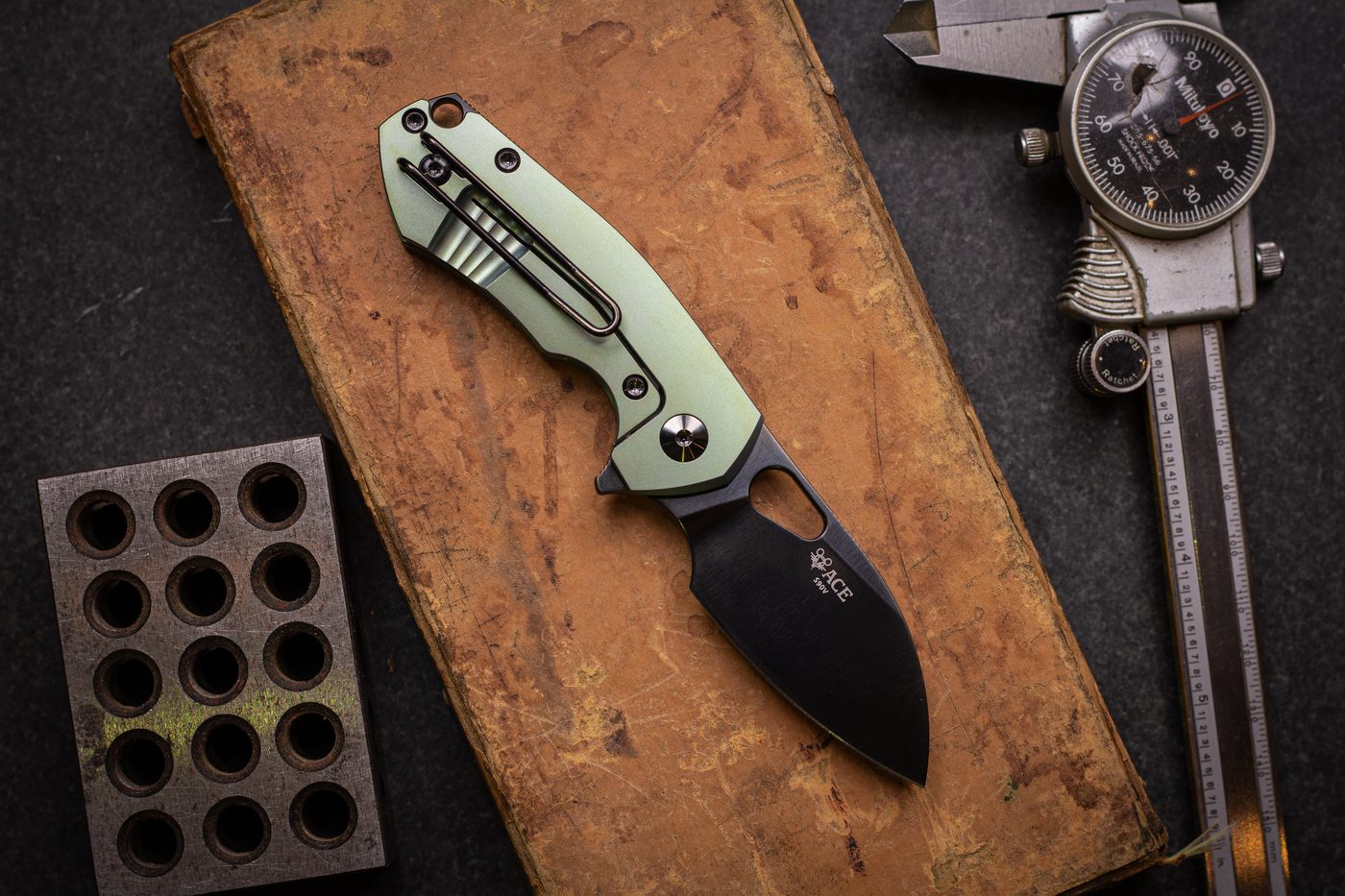
Best pocket knife for the office, ranked by what actually survives blade length rules and a coworker's second glance. Eleven picks, from a $40 button lock to a non-locking Spyderco slip joint, none of them worth an HR conversation.
A coworker once asked, half-joking, whether I was allowed to have that on me at a desk job.
Zero tolerance settles the question before it's asked. If your office prohibits knives outright, no argument about blade geometry or lock type moves that line, and everything that follows is irrelevant to you specifically.
For everyone operating under a less absolute policy, the calculation isn't legal so much as social. A tool that goes unnoticed creates no friction. One that reads, even briefly, as aggressive or out of place does, regardless of its legality or the quality of its construction. Bring a genuinely well-suited folder to slice an apple, unsettle the wrong colleague doing it, and the lesson arrives quickly: the plastic knife from the break room becomes the safer choice going forward, whatever its shortcomings.
That dynamic is why this list treats geometry and material with the same seriousness it gives length. A blade's shape and finish announce something about intent well before anyone bothers to measure either one, and a knife that reads as considered rather than confrontational has already done half the work.
Office carry, understood this way, is an exercise in minimal viability, identifying the smallest, least remarkable answer to a genuine daily need, then finding the little nuances that make it special. Those constraints aren't diminishments, they're criteria. We live for this type of thing. It's what we love, and it's almost exactly the premise for Daily Steel. These types of restrictions simply serve as defining criteria that give us a jumping off point for a tool that will be there, be able, and be pretty smooth while doing so.
CPM-S90V2.54" blademodified wharncliffebutton locktitanium handlesreversible clip
"S90V in textured titanium at 2.54 inches. The cleanest argument for office carry at any price."
The Artisan Cleo earns the top position on this list through the simultaneous resolution of three things that rarely align: size, materials, and class. At 2.54" the modified wharncliffe blade clears almost every office and municipal blade length restriction without needing to think about it. The CPM-S90V steel is genuinely premium, chart-topping edge retention, high corrosion resistance, a steel you'd expect to find on a $300 knife and don't here. The textured titanium handles with sand-polished finish look like something a designer chose rather than something that came out of a catalog. The button lock closes quietly and precisely. The reversible titanium clip disappears in a shirt or trouser pocket. At $139.99 this knife is not expensive for what it is, it is notably underpriced. If you carry one knife to work and you want it to represent how carefully you think about your tools, carry this one.
154CMsheepsfootslip jointmicarta handletwo-hand opening
"No lock at all. Nothing to click, nothing to flick, nothing for anyone to notice."
Where the Cleo and the Sprite argue for a lock quiet enough not to matter, the Bevy skips the argument entirely. It's a genuine slip joint, opened with two hands and a bit of patience, closed the same way, and there's simply no mechanism to read as anything. The sheepsfoot blade reinforces the same case in a different register, no point, straight edge, nothing in the silhouette that suggests anything but a tool. 154CM is unglamorous but entirely sufficient for office-grade cutting. Small, well-made, and about as far from a threat assessment as a folding knife gets.
MagnaCut2.44" bladesheepsfootliner lockcanvas micartamade in Italy
"Italian-made MagnaCut at 2.44 inches. The one you carry when the brief includes carrying something excellent."
The Riv is the exception to the minimal viability argument, a knife where the brief expands to include carrying something genuinely excellent, not just adequate. Ansø and Voxnaes built this from scratch in their own lineage: 2.44" MagnaCut sheepsfoot, liner lock, contoured canvas micarta with a gold backspacer, made in Italy. At $195 you are choosing this deliberately. MagnaCut at 2.44" is overkill for opening mail. It is also exactly the right amount of care applied to a tool you'll carry every day for years.
8Cr13MoV2.4" bladesheepsfootframe lockstainless handle
"Voxnaes's budget knife, not his fancy one, and the sheepsfoot argument still holds at $38."
The Pilar is the other Voxnaes knife on this list, and it makes the same geometry case as the Riv at a fraction of the price. Modified sheepsfoot blade, a stout stainless frame lock, a forward finger choil that gives a genuinely full grip despite the compact frame. 8Cr13MoV isn't premium steel, it's easy to sharpen and entirely sufficient for tape, mail, and the occasional apple. Named after Hemingway's boat, which is a better story than most $38 knives get.
Nitro-V2.9" bladesheepsfootliner lockG10 or aluminum
"Sheepsfoot blade in an office is the correct geometry. This one happens to be beautiful."
The sheepsfoot blade profile is the office carry argument made in steel: no point, straight cutting edge, nothing in its silhouette reads as threatening. Johan Jordaan's Parakeet applies the same precise design language that made the Wharning compelling to a blade shape that's categorically easier to carry through professional environments. Nitro-V holds an edge through weeks of low-demand office use without needing attention. The G10 and aluminum handle options both read as considered rather than tactical. At $57.95 this is the knife you can deploy in a conference room without generating a visible reaction from anyone in the room, and that's a specific kind of value the specs sheet doesn't quite capture.
M3982.49" bladeleaf bladenon-lockingFRN handlepocket clip
"Nothing to lock, nothing to flick, nothing for anyone in the room to misread."
If geometry and material can change how a knife reads to a stranger, the mechanism itself can do the same work even more directly. The Urban gives up nothing practical, one-hand opening off the Trademark Round Hole, real pocket clip carry, M398 steel that holds an edge as well as anything else on this list, while giving up the one detail most likely to make someone flinch. There's no lock to click shut, no blade snapping open with a flick of the wrist. It opens deliberately and it closes the same way. Built specifically to clear strict city blade-length rules like Chicago's, which makes it exactly as considered about the law as it is about the room.
CTS-XHP2.8" bladeleaf bladeback lockcarbon fiberreversible clip
"Spyderco's gentleman's folder line, and it looks the part more than anything else on this list."
The Chaparral is built specifically for this brief, thin, light, one-hand opening off the Trademark Round Hole, and finished in a carbon fiber and G10 laminate that reads as considered rather than tactical from across a desk. CTS-XHP holds an edge well and is genuinely easy to maintain. The back lock closes with a controlled, quiet motion rather than a snap, which matters more here than the spec sheet suggests. At 2.8" it's the longest blade on this list that still reads as understated, proof that length and perception aren't the same variable.
AR-RPM92.17" bladewharncliffebutton lockaluminum handles
"Under 2.2 inches, button lock, no drama. The minimal viability argument sized for the strictest office."
The Pyrite Mini is what you carry when the brief is "knife in pocket, no drama," sized specifically for the tightest blade-length rules. AR-RPM9 wharncliffe at 2.17", button lock, anodized aluminum handles, $44.95. Small enough to disappear in dress pants, corrosion-resistant enough to ignore, priced such that carrying it hard costs nothing emotionally. The button lock closes clean and quiet. Nobody will see it deploy.
Worth knowing: the CJRB Mica is the Pyrite Mini's larger relative, a 2.4" drop point in the same AR-RPM9/aluminum/button-lock package at $39.99, if your office allows a bit more blade and you'd rather have it. There's also a limited edition titanium/S90V/FatCarbon Pyrite Mini at $167.95 that reads as a proper premium carry in a sub-2.2" package.
H-1/H21.9" bladesheepsfootback lockFRN handlerust-proof
"The Ladybug's bigger sibling, built from a steel that genuinely cannot rust."
The Manbug Salt is Spyderco's rust-proof, nitrogen-based H-1 or H-2 steel in the Manbug's slightly larger, keychain-sized footprint, no pocket clip, a blunt sheepsfoot blade rather than the standard model's clip point. It was built for marine use, which is a strange pedigree for an office knife and also exactly why it earns a spot here: the same corrosion immunity that shrugs off saltwater shrugs off a forgotten trip through the wash. The back lock closes with a deliberate, audible click rather than a compression squeeze, small but useful in a quiet room. Small enough to live on a keyring and forget about, sturdy enough to actually reach for.
Nitro-V2.34" bladeflipperliner lockG10 handles
"Compact enough that nobody notices. Good enough that you notice."
Ben Petersen's Baby Banter solves the compact carry problem without sacrificing hand feel, the handle is short but gives four fingers when you use the choil, the flipper deployment is smooth on ceramic bearings, and Nitro-V holds an edge through weeks of low-demand office use without attention. At $45 across several handle color options it's the best-value genuinely small folder on this list. The G10 in green or burgundy reads as considered rather than tactical. This is the knife you pull out to open a package in front of a coworker without either of you thinking about it twice.
M3902.36" bladedrop pointcrossbar locktitanium or G102.12 oz
"M390 in a sub-2.4-inch package, locked shut by a mechanism nobody's going to recognize as a lock at a glance."
The Sprite solves a specific problem: you want a real lock, not a slip joint, but you don't want the lock itself to be the thing that draws a second look. Bestech's crossbar lock sits in the spine, quieter and less visually aggressive than a liner or frame lock, closed with a press instead of a flick. M390 at this size and price is genuinely rare, chart-topping edge retention in a knife most people will read as unremarkable, which is exactly the point. Titanium or G10 handles both keep the whole package under 2.2 ounces.
stainless2.5" bladescissorsscrewdrivernail file1.8 oz
"Not a knife. Better than a knife for some offices."
The Micra is a multi-tool with a knife in it, and in certain office environments it's the most defensible carry on this list. Nobody has ever been asked to leave a meeting because of a Leatherman. The scissors are the real argument: cutting a loose thread, trimming a hangnail, opening clamshell packaging that a blade can't reach cleanly. The knife blade is a bonus. The whole package is 1.8 oz and sits flat on a keychain. If your workplace is genuinely knife-averse and you want something useful in your pocket, carry the Micra.
Eleven knives, eleven answers to the same underlying question: what's the smallest, most defensible thing you can carry that still does the job and still reads right to the person next to you. If you want the most considered knife at the best balance of size, materials, and class, the Cleo. If you want a real lock without the visual signature of one, the Sprite. If you'd rather skip the mechanism question entirely, the Bevy, or the Urban if you still want one-hand opening and a clip. If blade geometry matters more than anything else, the Parakeet sheepsfoot, or the Chaparral if you want the same argument with more length and more polish. If you just need something in your pocket without thinking about it, the Pyrite Mini, and its larger sibling the Mica if your office allows a bit more blade. The Manbug and Micra cover keychain carry. The Baby Banter covers the value compact. The Pilar covers Voxnaes's budget side, the Riv his deliberate one. None of these will cost you the conversation you're trying to avoid, and that, quietly, is the whole brief.
← Back to archive
OpinionSeptember 2025
Why Chinese-made knives aren't what they were, and why people still pretend otherwise

The "made in China" dismissal is about a decade out of date. The market has moved. The conversation hasn't.
There's a version of this conversation that happens constantly in knife communities: someone recommends a CIVIVI or a Vosteed or a Kizer, and someone else says "it's fine for the price, but it's Chinese." As if "Chinese" is a quality tier rather than a geography.
It was a fair shorthand in the early 2000s. Chinese knife manufacturing in that era genuinely meant softer steels, inconsistent tolerances, and handles that would rattle after six months. That reputation was earned. It just doesn't describe the current market.
What actually changed
Three things transformed Chinese knife manufacturing over the past fifteen years. First: investment in CNC machinery. The precision tolerances on a current WE Knife, CIVIVI, or Kizer are the result of the same wire EDM and CNC grinding equipment that American and Japanese makers use. Kizer publishes information about their manufacturing process, and the output matches the claims.
Second: access to premium American and European steels. S35VN, 20CV, M390, MagnaCut, these are being used by Chinese makers at price points where American makers would still be spec'ing S30V. CIVIVI ships S35VN in production folders under $80. WE Knife routinely uses 20CV and M390. The steel conversation is completely different from five years ago.
Third: design talent. Jens Ansø and Jesper Voxnaes collaborate with Italian and Chinese makers. Ben Petersen's Knafs uses Kizer manufacturing. Ray Laconico designs for CJRB. The line between "designed in the USA/Europe" and "manufactured in China" is the actual story, and it's not a story of compromise.
The honest version of the remaining criticism
There are legitimate reasons to prefer American-made knives and none of them require pretending Chinese quality is still what it was in 2005. American-made supports domestic manufacturing. Brands like Benchmade and Spyderco's USA line have warranty infrastructure that some Chinese brands can't match. These are values arguments, not quality arguments, and values arguments are completely valid.
But dismissing the entire category while carrying a $200 American knife with softer steel and looser tolerances than a $60 Vosteed is willful ignorance. The specific brands worth recommending. CIVIVI, WE Knife, Kizer, Vosteed, CJRB, are not budget-compromised options dressed in marketing language. They're good knives that happen to be made in China.
The carry you can afford to use without anxiety is infinitely more useful than the carry you're protecting from scratches. The knife market is finally giving people a way to act on that principle.
← Back to archive
GuidesOctober 2025
The pocket clip is the most underrated spec, here's how to read one, here's how to read one
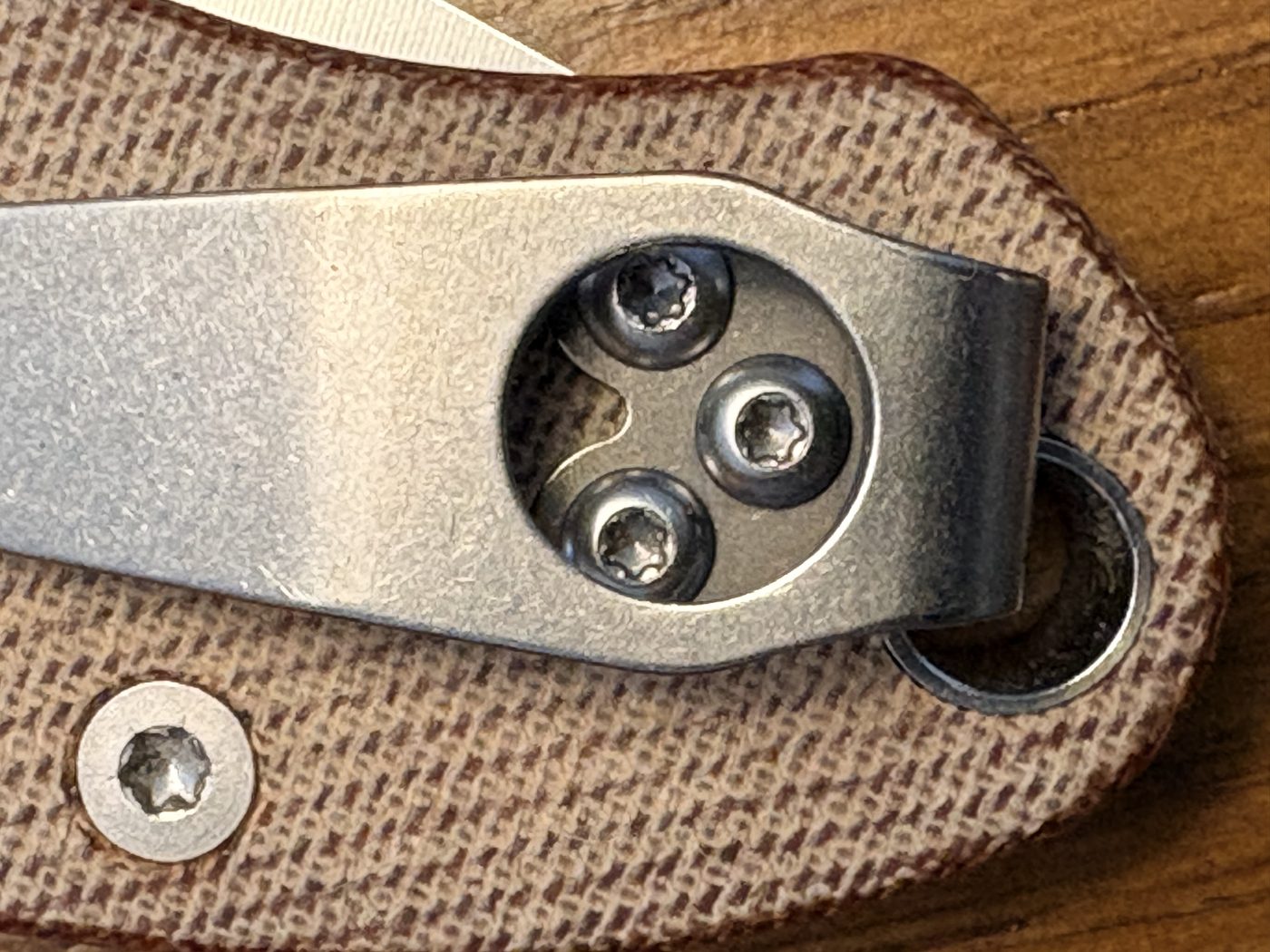
Everyone reads the blade steel. Almost nobody reads the clip. The clip is what you interact with fifty times a day whether or not you use the knife.
The pocket clip is the knife spec that most buyers ignore until they've bought enough knives to know better. It doesn't show up in review introductions or spec sheets. Yet it determines how the knife sits in your pocket, how easily it draws, whether it leaves marks on your pants, and whether you'll actually carry it consistently, the only metric that matters.
Clip position: the four-way standard
The best knives offer four-way reversible clips, tip-up and tip-down on both right and left sides. This matters because left-handed carriers are genuinely underserved by the knife market, and even right-handed carriers often prefer tip-down for ergonomic draw reasons. Spyderco standardized the four-way reversible clip decades ago. It remains the gold standard and it's not universally adopted. A knife with a fixed clip in the wrong orientation for you is a knife you'll carry reluctantly.
Deep carry vs. standard carry
Deep-carry clips sit the knife lower in the pocket so only the very tip of the clip is visible above the waistband. Standard clips leave more handle exposed. The difference matters most in professional and social settings where visible knife handles read differently than pocket clips that could be confused with a pen clip. The tradeoff: deep-carry clips can occasionally be harder to grab quickly when deployed under stress.
Clip tension
Too tight damages fabric over time. Too loose fails to secure the knife. This is nearly impossible to evaluate from a listing, it requires owner reviews in the six-month-to-one-year range, when people have noticed loosening or fabric wear. Plan to check before buying anything over $100.
Wire clips and aftermarket options
Wire clips, used by Spyderco and GiantMouse, provide excellent retention with very low fabric snag. Polarizing but effective. The most underrated clip upgrade is aftermarket: Lynch Northwest, Flytanium, and Prometheus Design Werx make replacement clips for popular platforms. If the OEM clip on a knife you otherwise love is the only problem, replacing it is a $20 solution. Before the three questions: Is it reversible for your carry preference? Deep-carry or standard? Does the knife have an aftermarket clip ecosystem if the OEM doesn't work?
← Back to archive
ListsNovember 2025
Cold weather carry: 5 folders that work with gloves

When your hands are covered, the knife has to compensate. These five work with gloved hands without requiring a technique change.
Gloved carry reveals knife design weaknesses that good weather hides. A small thumb stud that's trivial to operate bare-handed becomes nearly impossible with a thick glove. A liner lock requiring precise thumb placement becomes a hazard. These five handle it better than most.
14C28N or Nitro-V3.25" bladebutton lockMicarta or aluminum
The Raccoon's handle geometry is exceptional for gloved use, finger groove and choil provide purchase even in thick gloves, and the button lock is large enough to find without precision. The Nitro-V aluminum variant specifically avoids the thermal sink of solid metal handles in cold weather. The no-regret cold weather recommendation.
S45VN3.42" bladecompression lockUSA made
The compression lock is the gloved carry benchmark, closing presses against the spine-side lock bar rather than reaching into the handle. The oversized thumb hole deploys with thick gloves. Four-way clip for either hand. The most considered answer for genuinely demanding cold-weather use.
14C28N or Nitro-V2.99" bladeTrek Lock
The Trek Lock's spine-side button means closing presses downward rather than reaching in, naturally works with gloves. Dual front/standard flipper covers both deployment approaches. Symmetrical handle means no wrong orientation under reduced dexterity.
MagnaCut3.25" bladeliner lockG10
G10 handles grip in every condition including cold and wet. Large accessible thumb stud. MagnaCut's corrosion resistance handles wet cold conditions without concern. The practical cold weather answer for someone who needs a knife that can actually work hard.
Elmax3.1" bladebutton liner lockaluminum
The button liner lock's spine-side placement means pressing downward, works naturally with gloves. Elmax holds an edge long enough that one sharpening before winter lasts through spring. The premium button liner lock option for gloved carry.
← Back to archive
ListsNovember 2025
Holiday gift guide: the best EDC knives under $75
The sub-$75 tier is where we spend most of our time. These are the knives you give to people who haven't discovered this rabbit hole yet, and the ones you buy yourself when you want something good without the ceremony.
14C28N2.34" bladeliner lockG10
Sub-3" blade, full four-finger grip, 14C28N steel, coin pocket-native design. The first knife you give to someone who doesn't know what they want yet. It will convert them without overwhelming them. ·
AR-RPM93.11" bladebutton lock
AR-RPM9 steel is CJRB's proprietary alloy. D2-comparable with better corrosion resistance. On a $57 button lock folder with ceramic bearings. This is the gift for someone who asked what knife to get and you want to give them a real answer. KnifeCenter (~$57)
D22.96" bladeMicarta
D2 steel, Micarta handles in multiple colorways that develop carry patina, clean flipper action, design that reads as considered without being loud. The gift for someone who already carries and will notice the quality gap.
D2 or AR-RPM93" bladeG10
Clean design, functional ergonomics, smooth thumb stud, deep carry clip, G10 handles. At $35 this is the knife that lets you give a genuinely good carry tool without overspending. KnifeCenter (~$35–38)
D21.5" bladeframe locktitanium
The only keychain knife on this list that's a real knife. D2 steel in a titanium frame lock at 1 oz. The gift for the person who thinks they don't want a knife but would carry this one forever. KnifeCenter (~$75)
← Back to archive
ListsNovember 2025
Holiday gift guide: the best EDC knives under $150

$75–150 is where the conversation gets genuinely interesting, premium steel meets accessible pricing.
S35VN2.75" bladeclutch lockbrown paper Micarta
Warm tones, satin blade, bronze thumb stud, it looks like it was designed to be wrapped. S35VN, ceramic bearings, clutch lock, open-source scales. This is the $128 gift that feels like more. KnifeCenter ($128.24)
Nitro-V3.25" bladebutton lock
Nitro-V steel, smooth ambidextrous button lock, durable aluminum handles. The carry culture answer, the knife most likely to actually be in the pocket daily. KnifeCenter ($72)
Nitro-V2.46" bladebutton lockmultiple handle options
The best value on the list. Wide handle material selection means you can match it to whoever you're giving it to. KnifeCenter ($57.95+)
S35VN3.39" bladeRaffir Noble or FatCarbon
The gift for someone who knows what they're looking at. S35VN at $135 with handle materials that earn real appreciation from a person past the beginner stage. KnifeCenter ($134.95)
MagnaCut3.25" bladeG10
MagnaCut on one of the most proven working knife platforms. For the person who actually uses their knife hard. BladeHQ ($95.95)
← Back to archive
OpinionDecember 2025
The steel upgrade trap: when spending more on blade steel stops making sense
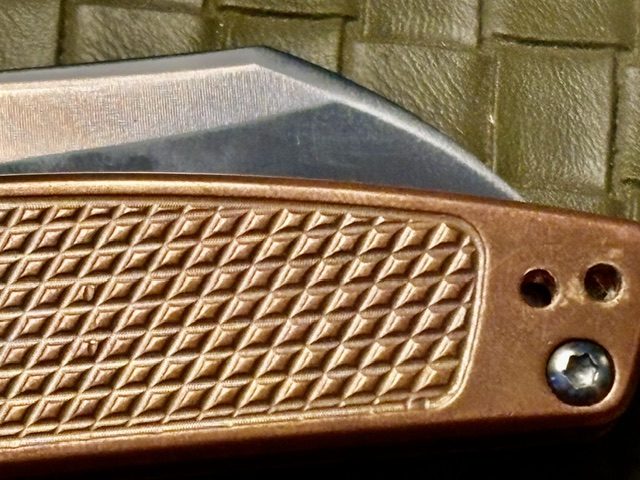
There's a point where steel becomes the reason to buy things. There's a subsequent point where you realize you were wrong about what mattered.
The steel conversation in knife communities is one of the most elaborate ongoing arguments about diminishing returns that exists in any hobby. Someone recommends a knife in a mid-tier steel, someone says "but have you tried M390?" someone else mentions MagnaCut, and suddenly you're forty-five minutes deep in a thread about carbide distribution. Let me offer the position no one in those threads wants to say: above a certain tier, steel differences are largely irrelevant to how you'll actually use your EDC knife.
What the steel conversation is actually about
Premium steels. S35VN, M390, 20CV, MagnaCut, outperform mid-tier steels in measurable ways. Edge retention is genuinely better. These differences are real and show up in controlled tests. They also require specific use to matter. To notice the difference between 14C28N and S35VN in daily carry, you need to be cutting hard materials repeatedly without touching up the edge. If you're opening boxes, cutting food, and doing the other daily tasks that constitute a year of EDC use, you will reach the end of the year without putting either steel in a situation where the difference reveals itself.
Where the steel upgrade genuinely matters
Hard use matters. If you're cutting heavy rope, processing game, or doing sustained outdoor tasks, the premium steel story becomes real. MagnaCut's corrosion resistance in wet environments is measurably better and matters for fishing, high-humidity carry, or gym bag storage. S35VN's toughness advantage over S30V matters if you're doing things that stress the tip.
Sharpening infrequently matters. If you touch up every few months rather than every few weeks, premium steel's longer edge life starts to reveal itself in ways it won't if you sharpen consistently.
The honest recommendation
Buy the steel level that matches how you actually use the knife, not how you imagine using it. If you carry daily for normal tasks and sharpen when you remember, most of us, the difference between well-heat-treated 14C28N and S35VN won't affect your experience meaningfully. Spend the saved money on a knife whose design you love more, or on a sharpening setup that makes any steel perform better. The steel upgrade trap is spending $150 more to get steel you'll never push hard enough to notice, and that trap has caught most of us at least once.