Posts: July – August 2025

4 posts · Summer carry, premium territory, and the case for spending nothing

Jul 1, 2025 Listicle 5 best lightweight folders for summer carry — when you don't want the extra ounce Jul 15, 2025 Opinion Is a $300 knife worth it? We carried six of them to find out Aug 5, 2025 Review Zero Tolerance 0308: a year with the knife your coworkers will ask about Aug 19, 2025 Opinion The Spyderco hole versus the Benchmade Axis: a hill I'll die on, gladly
← Back to archive Sun-dappled trail through Pacific Northwest forest in summer

5 best lightweight folders for summer carry — when you don't want the extra ounce

Shorts pockets are not your full-size folder's friend. When the layers come off, the carry math changes. These five knives earn their place when every gram is a conversation.

Summer carry is its own discipline. The jacket that made a four-ounce folder invisible in February becomes a t-shirt that makes the same knife print through the fabric and pull your waistband down on one side. The carry that worked all winter suddenly feels like you're announcing yourself. This is when lightweight stops being a premium feature and starts being an actual requirement.

The knives here aren't just light on the scale. They're light in the pocket — slim enough to forget, short enough to not print, and competent enough to handle what a daily carry knife actually encounters. Which, for most of us, is cardboard, fruit, and the occasional zip tie.

01
$200
CPM-S30V3.24" blade1.85 ozAXIS lockUSA made

"1.85 ounces. That's it. That's the review."

The Bugout remains one of the genuine engineering achievements in production folder history. At 1.85 oz it's so light it borders on suspicious — the first time you put it in a shorts pocket you'll keep checking to make sure it's still there. CPM-S30V steel is a genuine premium, the AXIS lock is ambidextrous and smooth, and Benchmade's lifetime warranty means this knife can outlast your ability to lose it. The Grivory handle isn't the grippiset material when wet — worth knowing — but for pure summer carry comfort, nothing at this weight touches it.

02
Benchmade Mini Bugout 533
$175
CPM-S30V2.82" blade1.5 ozAXIS lockUSA made

"For when even the Bugout is too much knife."

The Mini Bugout exists because some people found the full-size Bugout too large — and Benchmade, to their credit, took that feedback seriously. At 1.5 oz it fits in a mint tin and genuinely disappears in any pocket. The 2.82" blade is short but covers real daily tasks, and S30V keeps the steel story honest. If you're the kind of person who EDCs in gym shorts, runs, or travels light, this is the one. The sub-3" blade also clears most local blade length restrictions, which matters more than people admit.

03
$99
VG-102.88" blade2.5 ozlockback4-way clip

"Three decades of refinement for under a hundred dollars."

The Delica 4 has been in continuous production since the early 1990s and the reason is simple: Spyderco got it right and left it alone. VG-10 steel from Seki-City Japan is a genuine mid-tier steel that takes a keen edge and holds it better than most of its competition at this price. The 4-way reversible clip means left-handers and tip-down carriers are actually accounted for — rare at this price. At 2.5 oz it's not quite Bugout territory, but it's still light enough to forget about, and $99 leaves real money in your pocket for other things.

04
~$42–55
14C28N2.34" blade2.0 ozliner lockflipper + thumb stud

"Everything the Raccoon does, scaled down for summer."

The Raccoon Cub is Vosteed's answer to the specific problem of summer carry: you want the quality of the full Raccoon in a package that disappears into shorts pockets. At 2.0 oz and a 2.34" blade it's genuinely compact, but the finger groove and choil give you a full four-finger grip that doesn't feel like a compromise. Sandvik 14C28N steel is one of our favorite entry-level steels — corrosion resistant, easy to sharpen, punches well above its tier. The dual flipper and thumb stud deployment means left and right-handers are equally covered. For under $55 this is one of the most compelling summer carry options available right now.

05
~$45–57
D22.96" blade2.47 ozliner lock

"If you won't spend on the Bugout, spend here instead."

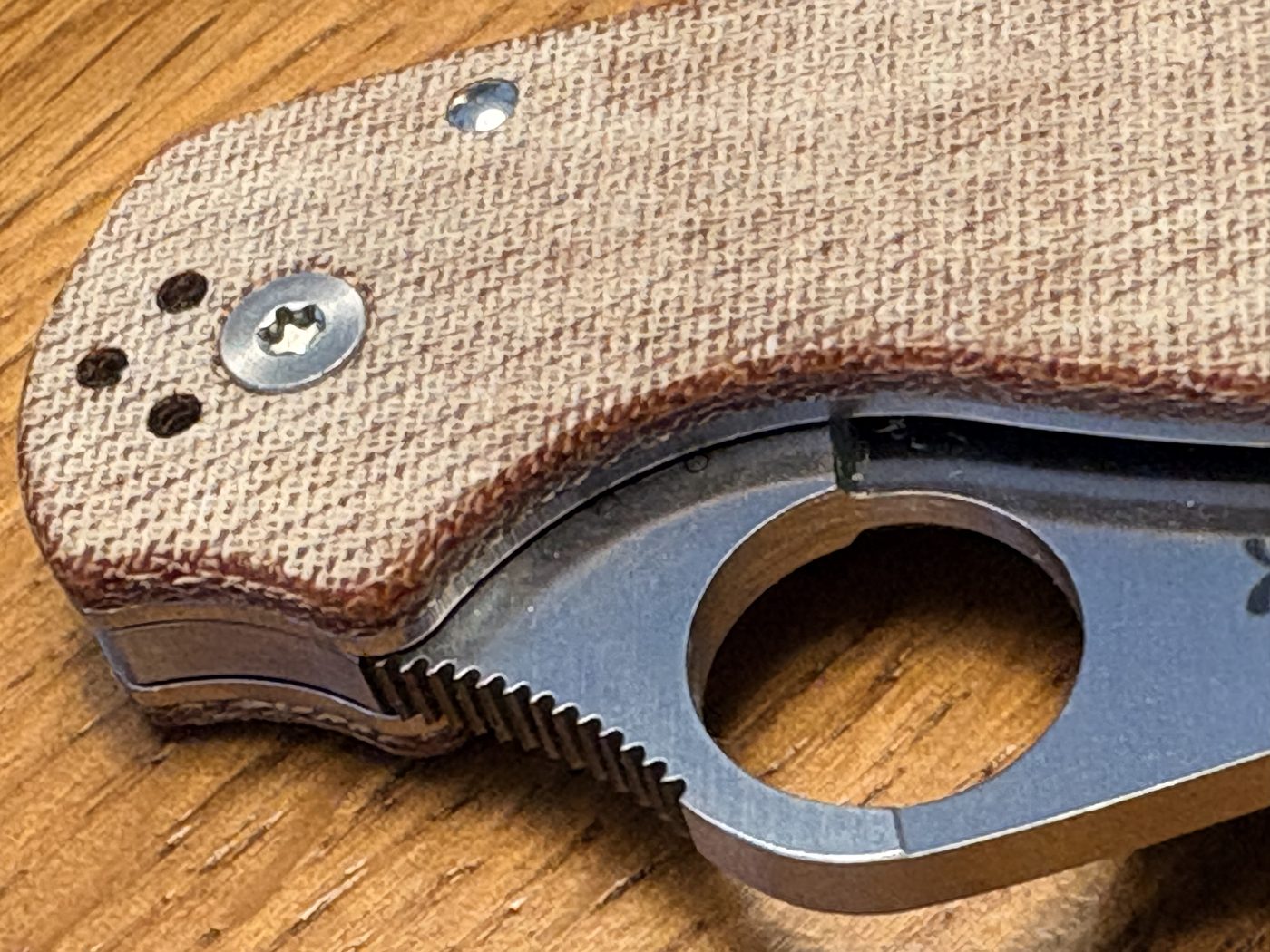
The Elementum earns its place on every list we write because it keeps earning it. D2 is one of our go-to entry-level steels — great edge retention, slightly more maintenance than true stainless, genuinely outperforms what the price tag implies. The Micarta handles develop a patina with carry that makes the knife feel more personal over time. At 2.47 oz it's not the lightest folder on the list, but it's the lightest by dollar and that's a real consideration.

The honest weight rankings: Mini Bugout (1.5 oz) → Bugout (1.85 oz) → Delica 4 (2.5 oz) → Elementum (2.47 oz) → Leek (3 oz). If weight is the only variable, the Benchmade small-frame duo wins. If budget is the constraint, the Elementum closes that gap faster than anything else at that price.

← Back to archive Premium folding knife on a dark leather surface

Is a $300 knife worth it? We carried six of them to find out

The honest answer is yes, no, and it depends on questions you might not have asked yourself yet.

Let me start with the most important thing I can tell you: a $300 knife will not make you cut better. It will not make your cardboard open faster or your cord slice cleaner. In actual cutting performance on real daily carry tasks, a well-made $60 knife is essentially indistinguishable from a well-made $300 one. If you're expecting revelation from the blade, you'll be disappointed.

And yet. Six months of rotating through the premium tier — Benchmade 940, Zero Tolerance 0308, Chris Reeve Inkosi, WE Knife Merata, Spyderco Para Military 2 in M390, Kizer Sheepdog — and I understand why people spend this money. Just not for the reason most people think.

What you're actually paying for

You're paying for tactile pleasure. The sound a bearing-pivot knife makes when it opens. The feel of titanium scales that have developed their own carry wear over months. The weight of a frame lock engaging with mechanical certainty you can feel through your thumb. None of this makes the knife more useful. All of it makes the knife more enjoyable to carry and interact with.

You're also paying for steel headroom. At $300, you should be getting premium steel — S35VN, 20CV, M390, MagnaCut — and at those tiers, real daily use starts to reveal the difference. An edge that would need touching up weekly on a mid-range steel holds for a month. For someone who carries hard and sharpens reluctantly, that's genuinely meaningful.

And you're paying for longevity and provenance. A Benchmade has a lifetime warranty that the company actually honors. A Chris Reeve Sebenza has parts that are available, individually, forever. These are instruments, not consumables.

Where the money isn't worth it

If you're buying your first or second knife, a premium folder will teach you almost nothing that a $60 CIVIVI wouldn't teach you better — because the expensive knife will make you too precious about it. The knife you're afraid to scratch is the knife you won't actually use, and use is how you learn what you actually want.

If you lose knives, the math is brutal. One lost ZT 0308 is six lost Elementums. The anxiety of carrying something expensive also defeats much of the enjoyment.

And if you're chasing super steels specifically — if M390 or MagnaCut is the reason for the spend — be honest about whether you'll actually notice. Most of us aren't working the edge hard enough to exhaust S35VN before the next sharpening session. The diminishing returns on steel beyond a certain point are real.

The six knives and what they taught us

The Benchmade 940 (~$230 at BladeHQ) is the most refined daily carry in the bunch. Osborne's reverse tanto blade is a masterclass in geometry and the AXIS lock here is better than on any other Benchmade. This is the premium EDC for people who want to carry an expensive knife without announcing it.

The Zero Tolerance 0308 (~$260 at BladeHQ) is a statement piece. It's too large for most daily carry use cases — 7 oz and a 3.75" blade is a deliberate choice, not a casual one. But the 20CV steel, KVT bearing system, and titanium frame lock are as good as production folders get. Carry it because you want to, not because you need to.

The WE Knife Merata is where the Chinese premium market starts to look genuinely threatening to American makers. Tolerances on par with Benchmade, M390 steel, and a price that lands about $80 below equivalent American-made options. The knife community has noticed. You should too.

Closer to home, Knafs — Ben Petersen's Oregon-based brand — is doing something different at the $140–150 tier with the Lander 2: S35VN steel, a genuinely clever clutch lock, open-source handle scales you can 3D print yourself, and a community-first ethos that no amount of marketing budget can manufacture. And Finch Knife Co. brings a vintage-inspired design language to 154CM steel builds in the $120–175 range that feel unlike anything else in the production knife market. Both brands reward the person who looks past the obvious names.

The honest verdict: Buy a premium knife because you want to enjoy it, not because it'll make you better at cutting things. That clarity will save you both money and disappointment. And if you do buy one — carry it. A $300 knife in a drawer is worth nothing. A $300 knife with three years of carry wear is worth everything.

← Back to archive Heavy-duty folding knife with titanium frame on a rugged surface

Zero Tolerance 0308: a year with the knife your coworkers will ask about

It's big, it's heavy, it's American-made, and it opens like a bank vault slamming shut. One year of daily carry on the ZT that refuses to be subtle.

The Zero Tolerance 0308 has no interest in going unnoticed. At 7 oz and 3.75 inches of blade, it does not pretend to be a gentleman's folder. When you put it on the table at a meeting, people ask about it. When you open it to cut a package in the office, the bearing-pivot snap commands the room. This is either the knife for you or it is absolutely not, and the gap between those two groups is wider than on almost any other folder I carry.

I've been rotating it into daily carry for a year. Here's what twelve months of real use looks like.

The specs

CPM-20CV: the steel story

CPM-20CV is a super steel — high wear resistance, excellent corrosion resistance, serious edge retention. In a year of carry that included food prep, rope cutting, and general hard daily use, I sharpened it three times. That's it. Three sessions on the Sharpmaker over twelve months. For anyone who resents sharpening as a chore, 20CV in a knife you actually use is the argument for premium steel made concrete. It does not sharpen easily — plan on taking your time when the day finally comes — but you won't need to often.

The carry reality after 12 months

Seven ounces is the conversation. In jeans with a good belt, the 0308 carries better than the number suggests — the slim frame lock profile means it doesn't bulk out the pocket the way a thick handle would. But in shorts, lighter pants, or anything without a sturdy waistband, the weight announces itself. I stopped carrying it in summer and moved it back into rotation in September. That's an honest limitation.

The titanium frame develops a beautiful carry patina — subtle color variations from pocket friction and hand oils that make the knife feel genuinely personal after a few months. G10 handles show no wear whatsoever. The blade stonewash finish hides the minor scratches that accumulate from pocket carry. After a year it looks like a knife that's been used, not abused.

The action

The KVT bearing pivot remains the smoothest deployment system in production folders. After a year, a full cleaning, and one re-lube, the opening action is essentially identical to day one. The flipper tab has just enough resistance that accidental deployment isn't a concern, but intentional deployment is fast and snappy. The frame lock engages with a satisfying solidity that more expensive custom folders sometimes struggle to match.

What I'd change

The pocket clip is tip-up only on most variants, which limits left-hand carry and tip-down preference. For a knife at this price, fully reversible clip positioning should be standard. At 7 oz it's also simply too heavy for some carry contexts — that's not a flaw, it's a design choice, but it means the 0308 is a rotation knife rather than an every-single-day knife for most people.

The verdict

The ZT 0308 is one of the best-made production folders in the American market. It's not for everyone — the size and weight make sure of that — but for people who want a serious, premium, USA-made folder that performs as well as it looks, there's very little at this price that competes. The 20CV steel is worth the premium if edge retention matters to you. The titanium frame lock will outlast you. And the KVT bearing system remains the benchmark against which everything else gets measured.

Buy it if: You want a serious American-made premium folder, don't mind the weight, and want 20CV steel that sharpens three times a year whether it needs it or not. Think twice if: You're a summer-primary carrier, work in an environment where the size reads as aggressive, or you're paying $260 primarily for the badge.

← Back to archive Two folding knives side by side on a wooden surface

The Spyderco hole versus the Benchmade Axis: a hill I'll die on, gladly

Two opening systems. Two philosophies. One of them changed everything. The other one is better. We're going there.

The Spyderco thumb hole and the Benchmade AXIS lock have been at the center of more knife forum arguments than any other topic short of steel debates. Both are genuinely great. Both have enormous, passionate communities. And I'm going to tell you one of them is better, because having an opinion is kind of the point of this site.

The thumb hole wins the opening argument. And the AXIS lock wins everything else.

The case for the Spyderco hole

Sal Glesser patented the round hole in 1981 and it remains one of the most elegant solutions to the one-handed opening problem in the history of folding knives. It requires no springs, no mechanisms, no moving parts beyond the blade itself. You put your thumb in the hole and apply rotational force. It works with gloves. It works wet. It works when the deployment assist has seized up from grit. It works forty years from now when the knife has been through everything and the mechanism has worn to nothing. There is a permanence to the simplicity that no assisted or bearing-pivot system can match.

Spyderco's genius was also in what the hole represents culturally. It became a signature — the Spyderco Spydie-hole is as recognizable as the Benchmade butterfly logo. It signals membership. When someone sees the hole, they know what they're looking at, and that matters in a community built around recognition.

The case for the AXIS lock

The AXIS lock, introduced by Benchmade in 1998, solved a problem that the knife world didn't fully know it had: how do you get a folder that's strong as a lockback, fast as a liner lock, and ambidextrous? The omega spring-loaded bar that spans the handle, engaging a notch in the blade tang, is mechanically elegant in a way that makes liner locks feel like the compromises they are. You can close it with one hand without repositioning your grip. You can open it with either hand. And under serious load, it locks up with a confidence that liner locks simply don't provide.

The reason the AXIS lock matters historically is that it created a generation of follow-on mechanisms. Spyderco's Compression lock. WE Knife's Framelock refinements. Half a dozen "inspired by" crossbar mechanisms from other makers. You can trace a significant portion of the premium folder market back to what Benchmade figured out in the late 1990s.

Why I land where I land

The hole is better for the knife. The AXIS is better for the carry. That's the real distinction. If you're evaluating a knife as a tool that might need to function in adverse conditions for decades with minimal maintenance, the Spydie hole is the answer. If you're evaluating which mechanism disappears most completely into daily carry — opening and closing with the least friction, the least repositioning, the most natural motion — the AXIS wins.

Most of us are in the second category. Most of us carry our knife through a normal day, not a survival scenario. Most of us want the knife to cooperate without thinking about it. The AXIS lock cooperates in a way that feels mechanical and refined in equal measure.

The thumb hole is a beautiful solution. The AXIS lock is the better one for how most of us actually live. I'll take both in different knives on different days, and I'll never stop enjoying the argument.

The actual answer: Own at least one of each and let the debate become personal. A Spyderco Delica 4 and a Benchmade Bugout together cost less than $300 and will teach you more about your carry preferences than any forum thread ever will.