Designer Spotlight: Jesper Voxnaes
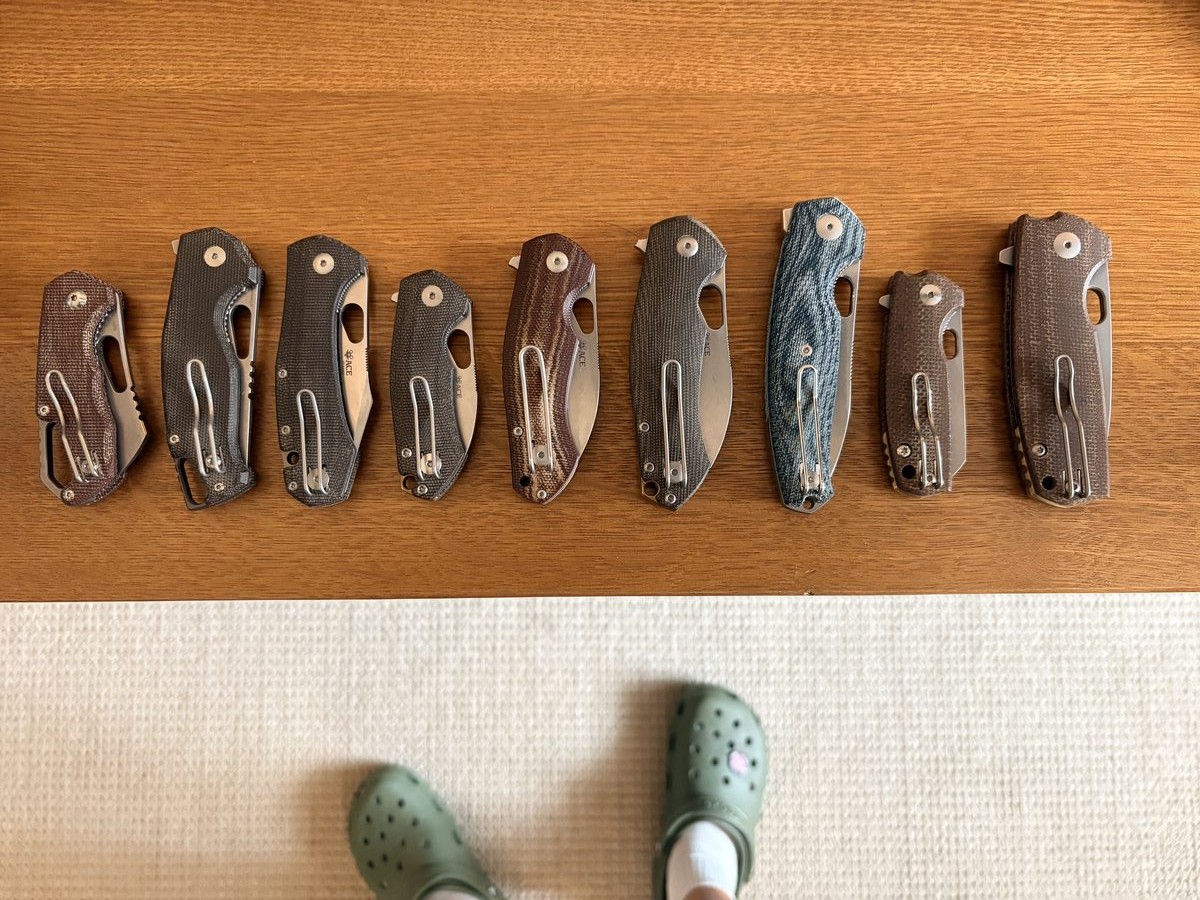
A Danish knife maker who started forging his own blades at eighteen. Forty years later, his design language is embedded in everything from $40 CRKT entry knives to Italian-made GiantMouse folders at $280. He is, without much competition, our favorite working designer in production knives right now.
There is a recognizable thing that happens when you pick up a Voxnaes knife for the first time, even if you don't know it's a Voxnaes knife. The handle sits naturally without demanding attention. The blade geometry does exactly what you'd expect it to do and nothing surprising. The whole object feels like it arrived at its current form through a process of subtraction rather than addition, as if someone started with more and kept removing things until only the necessary parts remained. This is not an accident. It is a design philosophy that Jesper Voxnaes has been executing consistently for decades, across dozens of collaborations with manufacturers on multiple continents, in price ranges from the decidedly accessible to the quietly premium.
Voxnaes started making knives in 1989, working out of a small workshop in Denmark, forging each blade by hand. His background is Scandinavian in the most practical sense of the word, the fjords and forests of northern Denmark were his testing ground, and the resulting design sensibility is one that places function at the foundation and trusts good proportions to handle everything else. He founded VoxDesign in 2007 as a formal design studio, but the aesthetic had been coherent for years before that. The iF Product Design Award followed in 2013, one of European design's more respected recognitions, and his production collaborations had by then spread to include CRKT, Böker, Fox Knives, MKM, Viper, and what would become GiantMouse.
What ties all of these together is the signature: a modified sheepsfoot or drop point that carries more geometry than it appears to, a generous finger choil that invites you to choke up, jimping placed where your thumb actually lands rather than where it looks good in photographs, and an overall aesthetic that ages well precisely because it never chased trends in the first place.
CRKT and the Pilar
The knife that brought Voxnaes to the widest audience is almost certainly the CRKT Pilar. The compact folder with its low-slung profile and wide drop point blade became one of CRKT's best-selling designs and introduced a generation of knife buyers to Voxnaes's work without necessarily knowing that's what they were encountering. The Pilar III extended and refined the concept, and the series has since proliferated into a range of blade steels and handle materials that spans from entry-level stainless to D2 to N690. None of this diluted what made the Pilar interesting in the first place: an unusually wide blade geometry for a compact folder, a handle that manages to be comfortable in the hand despite looking narrow in photographs, and the characteristic Voxnaes quality of feeling more substantial than its dimensions suggest.
The CRKT Amicus is the other CRKT collaboration worth knowing. Slimmer than the Pilar, more traditionally proportioned, but carrying the same design confidence, a knife that suggests its designer knew exactly what they were doing without needing to announce it.
Böker and the long partnership
Voxnaes's relationship with Böker is extensive enough to fill its own article. The collaboration spans years and dozens of models, including the well-regarded Böker Plus F3.5 series, a line of EDC folders in varying materials that became something of a template for what a Böker Plus Voxnaes design looks like: clean, functional, available in S35VN and G10 at a price that doesn't ask you to justify the purchase. The Böker Plus Little Friend is a more compact version of the same formula, with a wine-red G10 option that manages to look intentional rather than garish.
Then there is the Böker Plus Gnome, which we've written about in our EDC fixed blade article and which deserves the mention here as well. It is a 1.77" fixed blade in olivewood with a leather sheath and D2 steel, designed by someone who understood that a pocket fixed blade doesn't have to announce itself. The Gnome is the knife version of a well-made pen: useful in a quiet, understated way, pleasant to handle, and unlikely to impress anyone who wasn't already paying close attention.
The Böker Plus Nessmi Pro is the Voxnaes/Böker collaboration that earns the most carry time in this household. It's a compact fixed blade inspired by the Nessmuk pattern, named after American wilderness writer George W. Sears, and Voxnaes's interpretation of it is exactly what you'd expect: nothing wasted, everything considered. D2 steel in full tang construction, brown micarta scales with a red fiber liner, hollow copper rivets that double as a lanyard hole, leather sheath. It runs $50-75 depending on variant. The Nessmuk geometry, that distinctive upswept spine, makes it a better slicer than a blade this compact has any right to be, and the EDC fixed blade brief is served without compromise. We love this knife unreservedly.
Fox Knives and the Core series
The Fox Core series is Voxnaes's most sustained Italian collaboration outside of GiantMouse. Fox Knives, based in Maniago, manufactures the Core line in Italy, which, combined with Voxnaes's design sensibility, produces something with a slightly different character than the GiantMouse knives despite the shared designer. The Core has more heft to it, more presence. Where the GiantMouse ACE line achieves its confidence through precision and material selection, the Fox Core achieves it through proportion and a feeling of solid reliability that comes through in the hand immediately.
"The Core is the Voxnaes design that feels most like carrying a piece of Italian craft. N690, made in Maniago, and a handle geometry that rewards time in hand."
N690 is Böhler-Uddeholm's workhorse stainless: good corrosion resistance, solid edge retention, predictable sharpening behavior, Italian kitchen knife tradition. On the Fox Core, where it's heat treated by Fox's Maniago facility with care, it performs noticeably better than its mid-tier reputation might suggest. The blade geometry is generous without being aggressive, the drop point well-suited to the range of tasks a daily carry knife actually encounters. Handle options include aluminum in several colorways, canvas micarta, and at the premium end, carbon fiber. Price scales accordingly, from a very reasonable entry point through to something approaching the Fox/Voxnaes premium tier. The FX-604 is the standard Core; the Baby Core (FX-608) is the compact sibling in M390 for those who want smaller and more premium in the same family.
Worth mentioning in the broader Fox collaboration: the Fox Suru and Fox Yaru represent Voxnaes working at the premium Fox tier, titanium handles, CPM-S90V, frame locks, prices in the $300–400 range. These are collector's knives as much as daily carry tools, and they show what the Voxnaes design language looks like when material cost is less of a constraint. The Suru in particular has developed a quiet following among people who value Italian craft in a compact package.
MKM and the Isonzo
Maniago Knife Makers. MKM, is another Italian manufacturer with a strong Voxnaes relationship. The MKM Isonzo is the most accessible result: an FRN-handled compact folder in M390 with a thumb hole, carabiner loop, and reversible clip, available in sheepsfoot or hawkbill configurations. It is the Voxnaes entry point at the Italian end of the spectrum, an affordable way to understand what the design language feels like before committing to GiantMouse territory. MKM also produced several collaborations with GiantMouse directly, which is where Voxnaes's Italian relationships converge most completely.
Urban EDC and the sailor's knife lineage
Voxnaes has a personal design language for working knives that runs parallel to his gentleman's EDC work. It shows up most clearly in his custom Vox F5, a sailor's knife built around a modified sheepsfoot blade with a generous finger choil and 4mm spine stock, designed for the kind of use that doesn't involve carefully controlled cutting tasks. The F5 became sought-after and expensive; Urban EDC Supply collaborated with Voxnaes to produce a production version.
"The production version of the custom Vox F5. Compact enough for EDC, built stout enough to justify the 'sailor's knife' description without irony."
The F5.5 is compact, 2.7" of blade, but intentionally robust, with 4mm spine stock that gives it durability and confidence well beyond what the dimensions alone would suggest. The modified sheepsfoot is a Voxnaes signature: not a pure sheepsfoot, which foregoes a point, but a modified geometry that preserves some tip utility while keeping the spine drop controlled and the belly present for slicing. The flat grind is meticulous. M390 handles the corrosion and edge retention demands without drama; MagnaCut versions push both metrics further for those who want it. The finger choil and spine jimping are placed exactly where you'd put your thumb if you were designing it yourself, which is the Voxnaes tell in nearly everything he makes. The compass logo collaboration mark between Urban EDC and Vox is a nice detail on a knife that earns its provenance.
"S90V in the Vox modified sheepsfoot with a flat grind. The Becerro is the more refined Urban EDC collaboration, less working tool, more considered daily carry."
Where the F5.5 is built around the sailor's knife concept, robust, thick, designed for varied real-world use, the Becerro is a more refined take on the same Voxnaes design DNA. CPM-S90V is a super steel with outstanding edge retention and genuine corrosion resistance. The flat grind on a Vox-shaped modified sheepsfoot produces a slicer that performs well above the visual simplicity of the design. Green micarta handles are warm in the hand and develop character over time. The finger choil remains a constant, it is always there in a Voxnaes design, always placed correctly. At around $200 the Becerro represents good value for the material tier: S90V plus Italian-quality execution plus Voxnaes design language at a price that doesn't require significant justification.
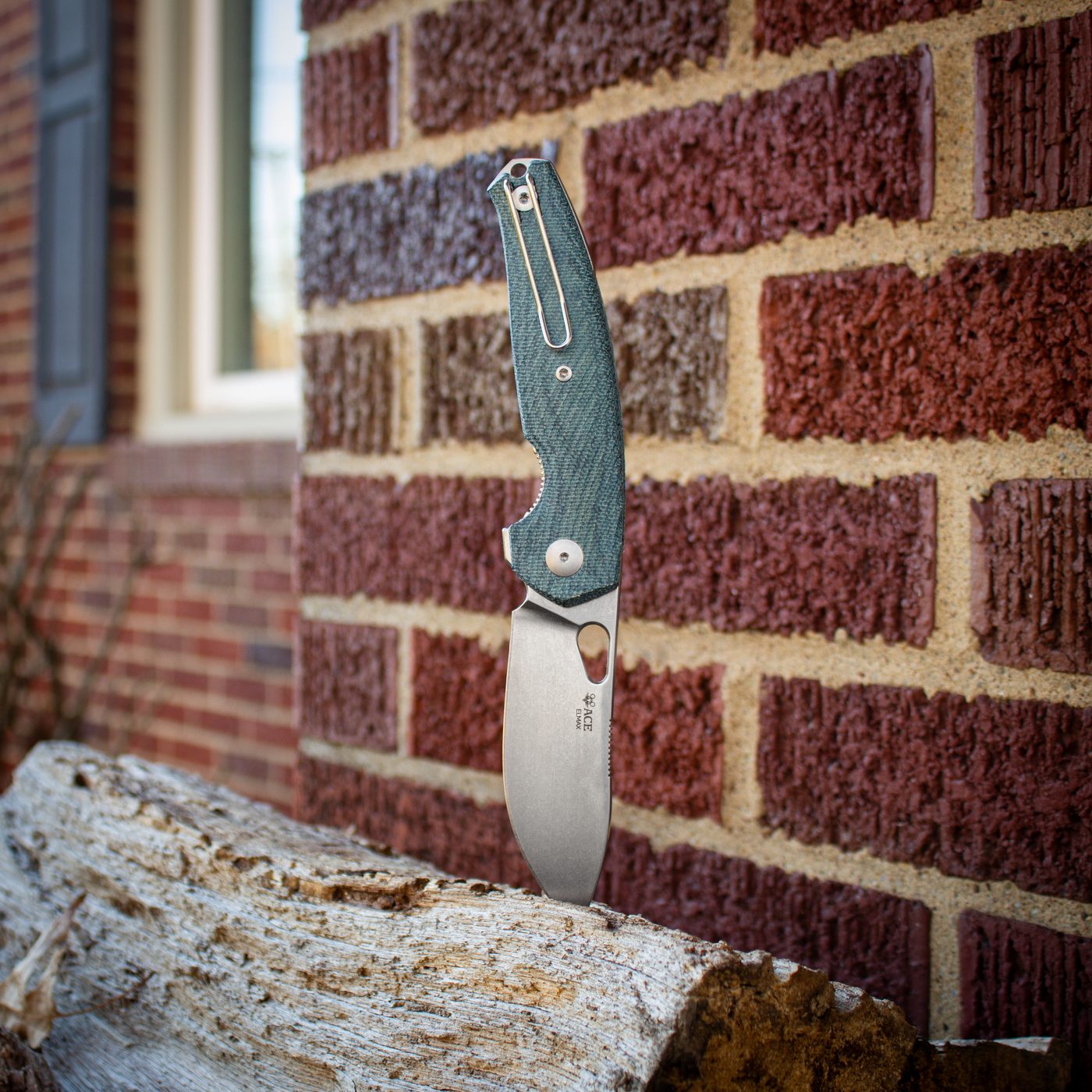
GiantMouse: the project that defines the era
How GiantMouse came to exist
The story, as GiantMouse tells it, began over drinks at a US knife show in 2015. Voxnaes and fellow Danish designer Jens Anso, who had been collaborating on various projects for years, found themselves in conversation with Jim Wirth, an American entrepreneur with both the resources and the conviction that a production knife brand built around genuine design talent, Italian manufacturing, and direct community engagement was a viable thing to build. The three founded GiantMouse that year.
What makes GiantMouse unusual is the degree of designer involvement in production. Voxnaes and Anso travel regularly to their Italian manufacturing partners, review prototypes exhaustively, and, according to the brand's own account, only approve production runs after carrying and using the knives themselves. This is not universal practice in the production knife world, where designer relationships are often arm's length licensing arrangements. The result is knives that carry the designers' fingerprints in ways that feel accurate rather than decorative.
Every GiantMouse knife is a Jens Anso and Jesper Voxnaes collaboration, which means separating the two designers' individual contributions is largely an exercise in speculation. What's observable is the output: a consistently coherent line of Italian-made folders in the $150–285 range, named after places that mean something to the founders, and distinguished by a combination of premium materials, thoughtful proportions, and the kind of fidget quality that comes from ceramic bearings running in a well-toleranced pivot.
"Named after the bar at the Grand Hotel Nuremberg. The Atelier is our current daily carry from the GiantMouse line, a 2.875" Elmax liner lock that makes a compelling case for the mechanism's rehabilitation."
The Atelier is the GiantMouse EDC entry in the most precise sense: compact enough to disappear in a pocket, built with material quality that justifies the price without making you justify the purchase. Elmax is a Swedish powder steel with better wear resistance than S35VN and better toughness than M390, making it a thoughtful choice for a knife you actually carry and use rather than admire. The liner lock on a well-made Italian knife is not the compromised mechanism the knife community spent a decade or so dismissing, the Atelier's lockup is solid and precise, and the release is clean and one-handed. In titanium it carries lighter than you'd expect; in micarta it feels warmer and more organic. Both are excellent. We carry the titanium version.
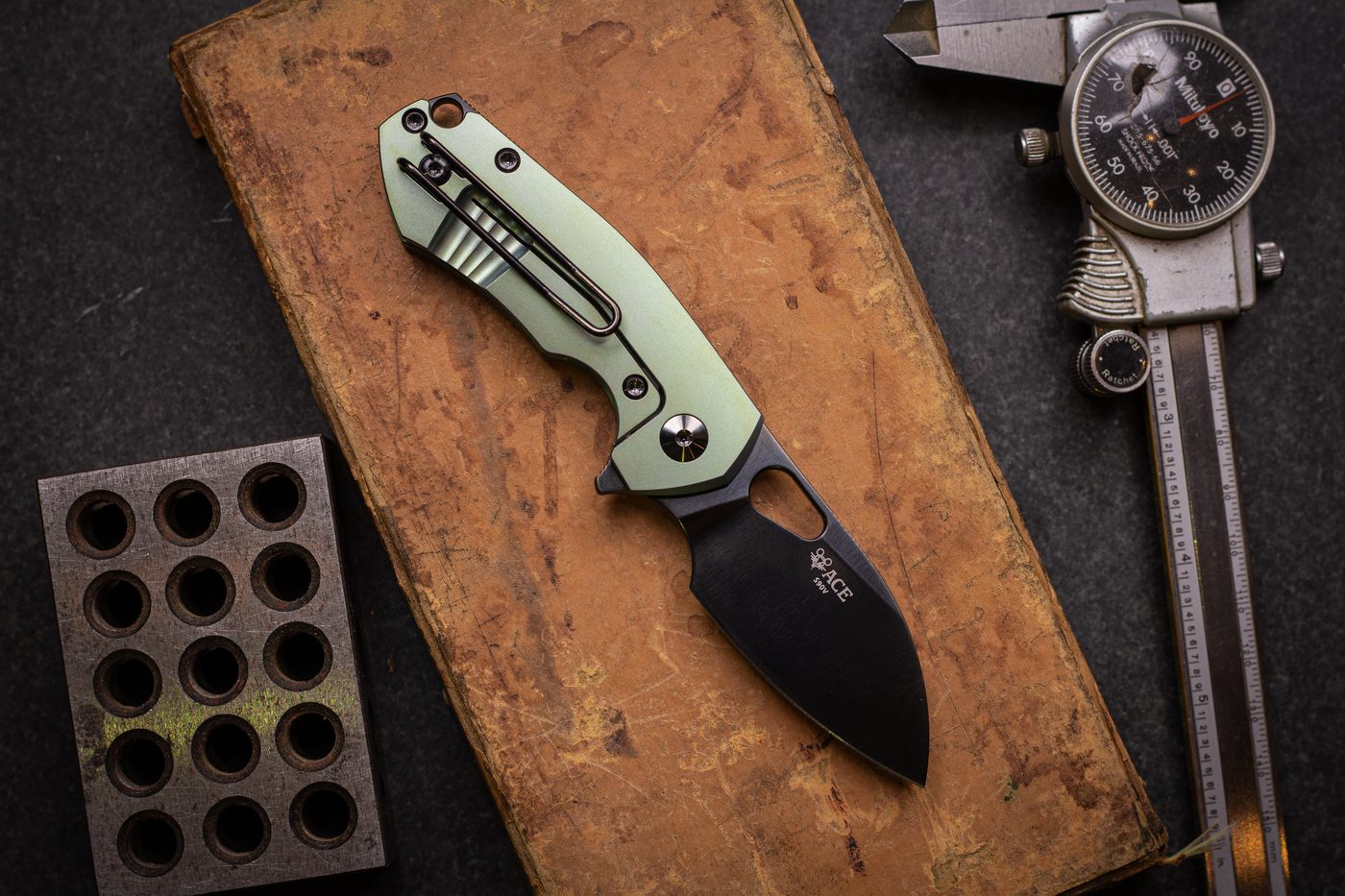
"The Riv is the GiantMouse knife for people who want to cut things rather than carry things. The fine grind is the whole story."
The ACE Riv occupies a specific place in the GiantMouse lineup: it is the slicer. While the Atelier and Tribeca emphasize proportional elegance and material range, the Riv prioritizes cutting performance through an unusually fine grind that makes the blade feel almost surgical compared to most production folders. This is a knife with a specific purpose, it is best for food prep, precision cutting tasks, and anything where the edge geometry matters more than blade toughness. The compact size and wire clip keep carry unobtrusive. At $156–191 it is the most accessible entry into the GiantMouse ACE line, and the fine grind is a differentiator that's immediately apparent the first time you use it on anything that requires real slicing.
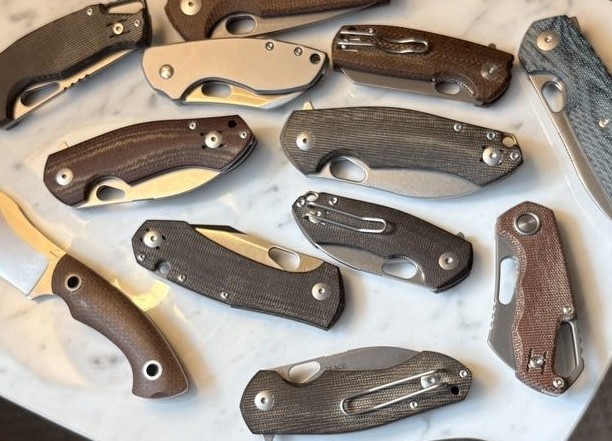
The broader GiantMouse ACE line deserves mention beyond just these two. The ACE Farley is the slipjoint option in the line, non-locking, under 3", designed for jurisdictions where that matters, carrying the same Italian-made quality as its locking siblings. The ACE Clyde is the more traditionally proportioned ACE folder, a bit larger than the Atelier, with the same material range. The ACE Grand sits at the larger end. The line is named consistently after places, a choice that reflects GiantMouse's interest in building knives with a sense of geography and occasion rather than just performance specifications.
"The GiantMouse knife with MagnaCut. Named after the TriBeCa neighborhood in Lower Manhattan, where the founders have spent time together. The dual deployment and finger choil make it the most versatile opener in the line."
The Tribeca takes design cues from the limited edition GM4 and pushes the GiantMouse formula toward its current steel apex: CPM-MagnaCut in a 2.875" blade, flipper tab and thumb hole for deployment options, a finger choil that lets you choke up on the blade for precise work. The titanium version at $285 is the premium end; micarta at $215 is the more practical carry choice. Both handle options are well-executed by the Italian manufacturing partner, and both versions benefit from GiantMouse's ceramic bearing pivot and the smooth-then-snappy action that results from a well-toleranced blade-to-handle fit. The Tribeca is the Voxnaes/Anso collaboration at its most current: MagnaCut, Italian craft, a knife named after a neighborhood where two Danish designers and an American entrepreneur first got serious about what they were building.
The accessible end: CRKT Pilar III
"The knife that introduced a generation to Voxnaes. At $40–55 it remains one of the better arguments that good design doesn't require a premium price."
The Pilar III is what most people encounter first, and it's a fair introduction to what Voxnaes does. The wide drop point is immediately distinctive, wider relative to blade length than most compact folders, and gives the knife a visual presence and cutting geometry that read differently from the typical EDC proportions. The liner lock on the CRKT version is workmanlike rather than refined, the steel is mid-tier rather than premium, and the overall build quality reflects the accessible price point without embarrassing the design. It is a good knife. It is also a useful demonstration of how Voxnaes's proportional sense survives translation to mass production at accessible price points, which not every designer's work can claim.
The shape of the work
Across all of this, from the Pilar at $40 to the Tribeca at $285, from the Gnome fixed blade to the Fox Suru in S90V titanium, the Voxnaes signature is consistent enough that you can learn to recognize it without being told. The finger choil is almost constant. The jimping is placed where your thumb lands. The blade geometry carries more functional thought than first appears. The handle, whatever material it's made from, sits quietly in the hand without requiring adjustment or consideration.
This consistency over such a wide range of price points and manufacturing partners is the thing we find most worth remarking on. Many designers do excellent work in a narrow band. Voxnaes does recognizable work from one end of the market to the other, and the design language holds its coherence whether the knife costs $40 or $280. That is not as common as it should be, and it is why, when we're asked who we think is doing the most interesting work in production knife design right now, the answer comes without much deliberation.
Where to start: New to Voxnaes? The CRKT Pilar III is the accessible entry. Ready to invest? The GiantMouse ACE Atelier is our current daily carry recommendation. Want something different? The Urban EDC Becerro for a working knife in S90V, or the Fox Core for Italian craft at a more accessible price.