GiantMouse Atelier: the knife that makes its own case
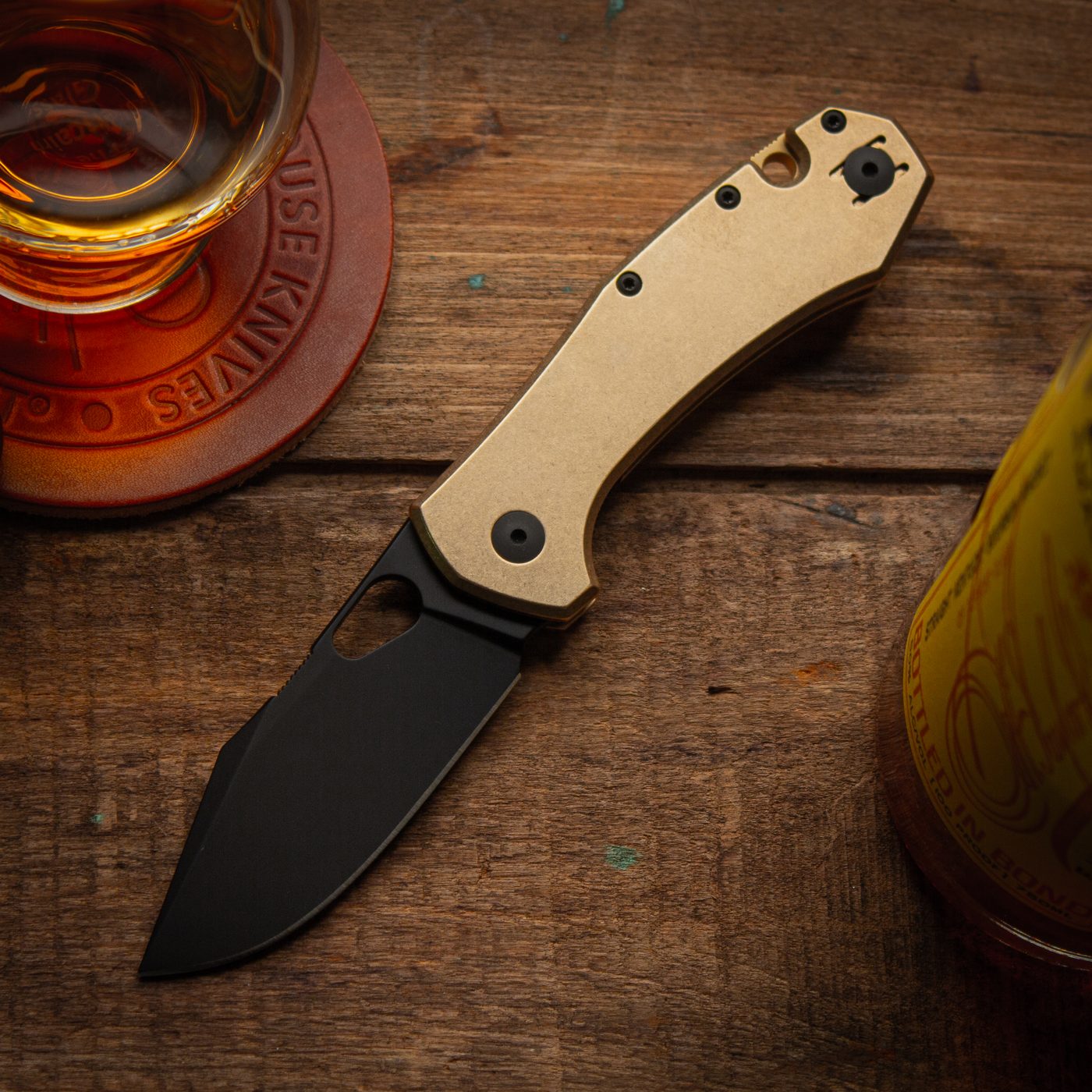
2.875 inches of Elmax. Italian-made. Anso and Voxnaes. A liner lock that I talked myself out of liking for about a decade and have now apparently fully accepted back into my life.
GiantMouse named this knife after a bar. The Atelier Bar at the Grand Hotel Nuremberg, specifically, a place that apparently embodies the kind of refined, unhurried attention to detail that Jens Anso and Jesper Voxnaes wanted to put into this knife. I don't know the bar. I know the knife. And I find it entirely credible that whoever named it made that connection without irony, because the Atelier is genuinely that kind of object: the kind that makes you want to explain to someone who didn't ask why it's here, why it costs what it costs, and why you've been carrying it for two weeks without touching anything else.
Which brings me to the liner lock.
The liner lock rehabilitation
I grew up knife-adjacent in the 90s, which means I came of age when liner locks were everywhere and then I watched the community collectively decide they were the second-best option. Lockbacks came back into fashion. AXIS locks arrived and reset the conversation. Frame locks. Button locks. Crossbar locks. Each one, at some point, positioned as the improvement on the liner lock's basic premise. I absorbed this without really questioning it, and somewhere along the way I stopped reaching for liner lock folders as a first choice.
The problem is that I was wrong about why. The liner lock fell out of favor partly because of execution failures at the budget tier, locks that engaged inconsistently, lockup that moved under pressure, mechanisms that wore poorly. Those were real problems on real knives. But a well-made liner lock on a well-machined knife is not a compromised mechanism. It is a clean, direct, mechanically simple system that does exactly what it's supposed to do: engage reliably when you open the blade and release cleanly when you push the liner over. There's nothing wrong with the concept. There was something wrong with the execution on a lot of cheap knives, and I let that bleed into a general preference I didn't examine closely enough.
The Atelier has a liner lock. It engages with a crisp, definitive click, sits solidly at approximately 40% of the liner width, right where you want it, and releases cleanly every time. After two weeks of daily carry I have zero concerns about it. The mechanism is not the limitation here. It never was.
The knife itself
Anso and Voxnaes have been designing knives together long enough that their collaboration has developed a legible aesthetic: clean lines with precisely enough visual interest to avoid being boring, ergonomics that look considered rather than engineered, a proportion sense that makes the knife photograph well at any angle. The Atelier is their gentleman's carry entry, compact at 2.875", Italian-made by Lionsteel's manufacturing facility, priced in the range where you're paying for real materials and real craft rather than brand positioning.
Elmax is a Swedish powder steel that occupies a specific niche in the production knife landscape: meaningfully better wear resistance than S35VN, somewhat easier to sharpen than M390, excellent corrosion resistance, good toughness. It's a steel that performs without requiring you to build a sharpening rig around it, and on a knife this size, a 2.875" blade doing daily cutting tasks, it's genuinely overkill in the best way. The edge lasts longer than you'll need it to between sessions. When you do sharpen it, it responds reasonably to quality ceramic stones without demanding diamond abrasives.
The handles are titanium or micarta depending on the version. The titanium is the carry choice: light, hard-wearing, developing a patina over time that personalizes the knife without being precious about it. The micarta version is warmer in the hand and photographs better, which is a real consideration if you're the kind of person who photographs knives. Both versions are slim. The clip is deep carry and sits naturally. The deployment is smooth on ceramic bearings and the opening geometry on the flipper tab is set up so that the blade snaps open with authority rather than rolling into position, a distinction that matters more than it sounds when you're opening a knife forty times a day.
The justification loop
Here's the specific thing about the Atelier: it exists in a price range where the justifications for buying it are real but so are the alternatives. At $220–260 you can have a lot of knife. S35VN titanium folders from Vosteed. Several strong CJRB or Artisan options with super steel. The Knafs Lander 3. The Kizer Wharning. All of them are excellent and all of them cost less.
The Atelier costs more because it's Italian-made by people who have been doing this for a long time, because Anso and Voxnaes are among the more considered designers working in production knives, and because Elmax in a liner lock titanium folder at this size is a specific combination that isn't being done better anywhere at this price. That's the honest justification. Whether it's your justification depends on what you're optimizing for.
I've been optimizing for a pocket knife that I reach for without thinking about the alternatives. The Atelier has been that knife. The liner lock is fine. The liner lock is more than fine. I've been lying to myself about liner locks for the better part of a decade and the Atelier called the bluff.