The backlock: buried by four different "next big things," still here
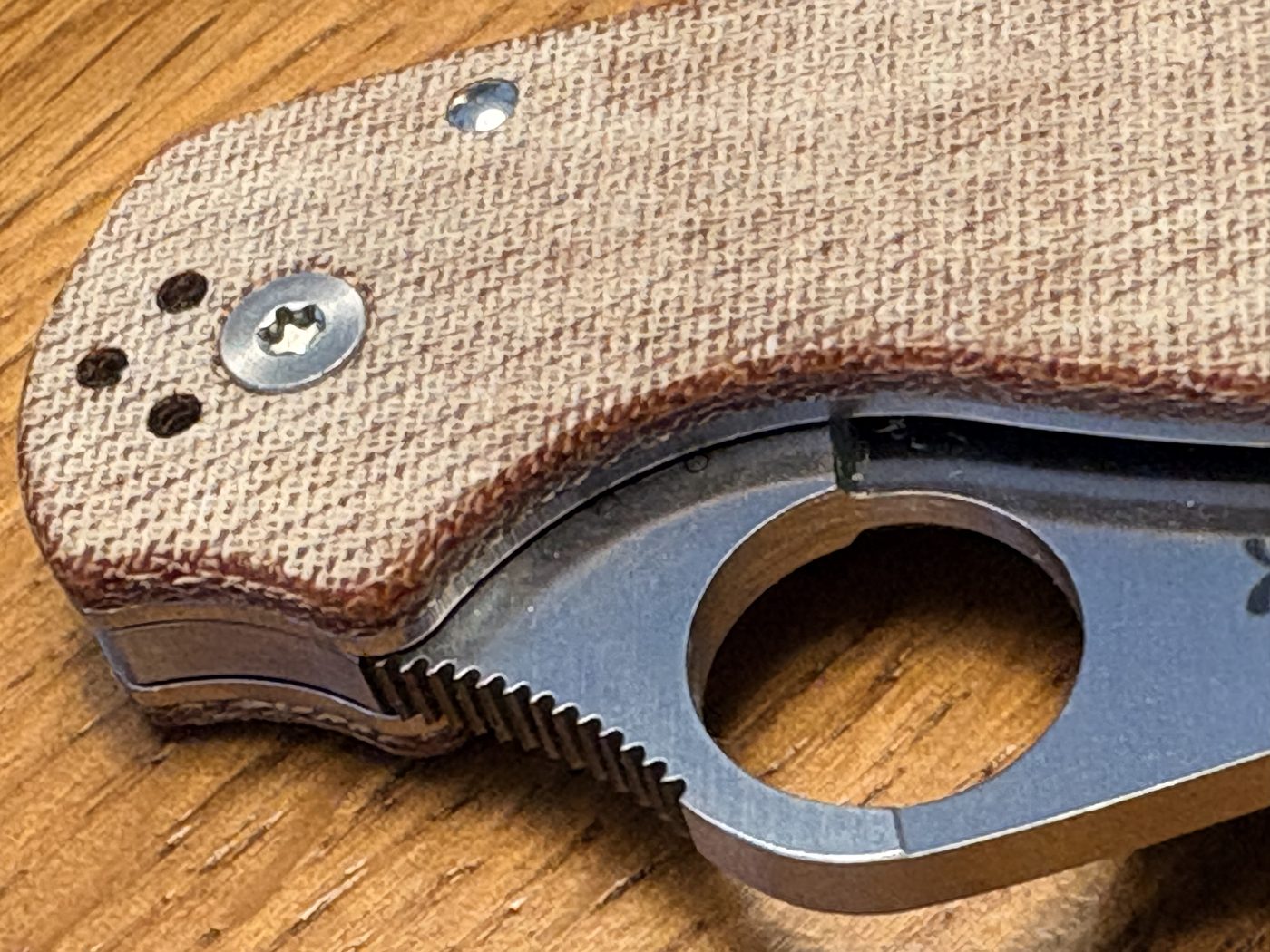
Liner locks, frame locks, crossbars, buttons: every one of them has, at some point, been sold as the thing that finally makes the backlock obsolete. It hasn't happened. Here's why the oldest mechanism in the series is still one of the best, and seven knives, mostly not the ones you'd expect, that prove it.
This is sensitive territory, a little. In Part 1 we covered the full landscape of folder locks. In Part 2 through Part 4 we went deep on liner and frame locks, the crossbar, and button and top liner locks. Each of those pieces was, in its own way, an argument for why a newer mechanism solved a problem the backlock supposedly had. That's the pattern with this lock specifically: it's been declared dead more times than any other mechanism in the category, first by liner locks, then frame locks, then crossbars, then button locks, each one pitched at some point as the more modern, more elegant answer. And yet here we are, five parts into a series about folder locks, still writing about a mechanism that's been in continuous production since the 1800s.
It also happens to be the lock most likely to already be on your keychain. Spyderco's Ladybug and Manbug, the tiny "little big knives" people clip to their car keys and forget about, are both backlocks. So is the Knafs Lander 6, a genuinely great cheap keychain option that runs the same mechanism at a fifth of the price. If you own a keychain knife at all, there's a decent chance you're carrying a backlock without ever thinking about it as one.
How it actually works, and the two-hands myth
A backlock runs a spring-loaded rocker bar along the spine of the handle. Open the blade fully and one end of the bar drops into a notch cut in the blade tang, holding it locked open under spring tension. To close, you press the exposed tail of the rocker at the back of the handle, which pivots the bar out of the notch and lets the blade fold. Because the release sits on the spine rather than on either scale, the mechanism is naturally ambidextrous, no handedness built into the geometry at all.
One common knock against the backlock is that it needs two hands to close. That's mostly true out of the box, but it's not a hard rule. A lot of backlock owners, ourselves included, close them one-handed with a small repositioning trick: roll the knife in your hand and use your middle or index finger to depress the lock from underneath while your thumb folds the blade. It takes a little practice and it's not something Spyderco or Buck puts in the manual, but once it clicks, the "two hands only" complaint mostly evaporates.
Worth admitting upfront: ask most people to name a backlock knife off the top of their head, and you're going to get Buck and Spyderco, in some order, almost every time. We ran into that ourselves putting this list together. Spyderco alone makes enough excellent lockbacks that it would have been easy to fill this entire piece with nothing but Spyderco models and call it a day. We didn't, on purpose, but if you walked away from this article thinking Spyderco basically owns this lock type, you wouldn't be wrong.
What happens when you push the backlock harder
If you want to see what happens when someone takes the backlock and asks "what if this needed to survive being used as a pry bar," look at Cold Steel's Tri-Ad lock. It's not a separate mechanism so much as a backlock with a stop pin added to redistribute stress away from the pivot, and it's been tested holding 800 pounds of hanging weight. Depending who you ask, it's the strongest folding knife lock in production, full stop. We're not covering it as its own entry here, it's really its own conversation, but it's proof of how much headroom the basic backlock concept still has.
Seven backlocks worth carrying
-
The 110 is the granddaddy, but the 112 is the family member that actually fits Daily Steel: a 3" blade instead of 3.75", sized for a pocket instead of a belt sheath. New for 2026, the Slim Heritage Elite treatment brings it into MagnaCut steel with BOS heat treatment, a profile a quarter-inch thinner than the standard 110/112, and an integrated pocket clip, while keeping the ebony inlays and brass or nickel silver bolsters that make it look like a Buck. This is the classic pattern updated instead of replaced.
-
Ask around and you'll find a lot of Spyderco diehards who'll tell you, unprompted, that this is the best-ergonomic Spyderco makes, full stop. Full-flat grind, round hole opener, a shape that just disappears into your hand. Worth a mention alongside it: the Lil' Native, same DNA and same lockback option scaled down about half an inch in every dimension, for anyone who wants the Native shape in a smaller pocket footprint.
-
Ships as a lockback by default and shows up on more than one "best overall lockback knife" list for a reason. Slimmer and lighter than the Native, still a full four-finger grip, still that same reassuring backlock click.
-
The small/slim pick. Same backlock, same round hole opener, shrunk down into one of the lightest genuinely capable EDC knives Spyderco makes. The 50/50 choil is the trick that lets a 2.25" blade feel like it's punching above its size.
-
The old-school pick. Made in Jacksonville, Alabama, a 2.75" blade, 1.1 ounces, aluminum or wood handle options, nail nick opening. No frills, no modern flourishes, just a small, honest, American-made lockback that costs a fraction of what the Buck and Spydercos above cost.
-
The fun one. Part of Finch's "Sugar House Knife Syndicate" line, named after Pretty Boy Floyd, with a 2.5" 14C28N clip point blade and layered resin or bone handle options depending on which release you land on. It leans hard into a Depression-era outlaw aesthetic that has nothing to do with function and everything to do with why it's on this list.
-
The budget pick, and it's budget by design rather than by corner-cutting. Pete Gerber and Blackie Collins built it in 1980 as the first all-synthetic-handle knife on the market, and the modern version is still doing the same trick: a glass-filled nylon handle, a 420HC blade, and a total weight around 1.2 to 1.3 ounces. It also comes in a genuinely fun color lineup now, lichen green, mustard yellow, burnt orange, urban blue, alongside the standard black and gray. Priced and built like a budget knife on purpose, which is exactly what makes it disappear in a pocket.
None of the seven knives above are trying to reinvent the backlock, and that's kind of the point. The mechanism has been fully-formed since before any of these companies existed. What separates a good backlock knife from a forgettable one isn't the lock, it's everything built around it: the steel, the ergonomics, the handle material, the fit and finish. Four other mechanisms have spent decades trying to make this one unnecessary. It's still here because it never needed fixing in the first place.
This is Part 5 of our ongoing lock series. We've now covered liner, frame, crossbar, button, top liner, and backlocks in depth, along with the full landscape in Part 1. If there's a lock type we haven't given its own deep dive yet, let us know.