Button locks and top liner locks: keeping your fingers out of it
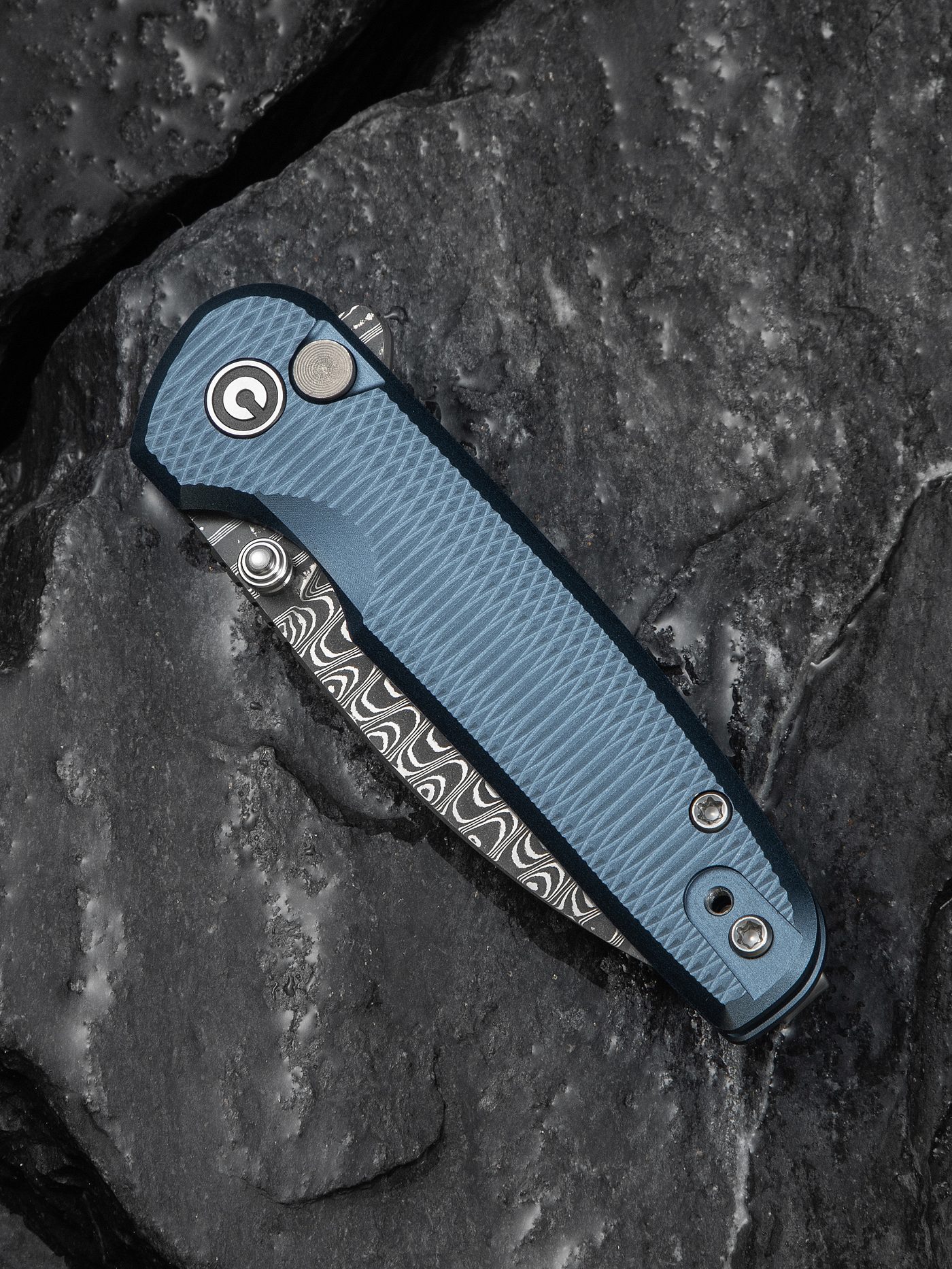
The common thread between button locks and top liner locks is simple: your fingers stay away from the blade path during closing. That's not a small thing. Here's how both mechanisms get there, and why one of them is the more elegant solution.
In every lock type we've covered so far in this series, liner locks, frame locks, and crossbar locks, closing the knife requires your thumb to either cross the blade path or actuate something that's in close proximity to it. That's not a safety crisis in practice; people carry these knives every day without incident. But it's also not ideal, and the knife market has produced two related mechanisms that solve the problem differently: the button lock and the top liner lock.
We're covering them together because they share the same fundamental design goal and because their histories are intertwined in an interesting way. The button lock is older, more mechanically complex, and the standard bearer for the finger-clear closing experience. The top liner lock is the more recent arrival, simpler in construction, and in our view the more elegant solution to the same problem. Understanding both is worth the time.
A brief history: the plunge lock and what replaced it
Before the modern button lock, production folders often used a plunge lock: a spring-loaded pin that seated into a recess in the blade tang, holding it open, and required you to depress it with a thumb to release. It was an early attempt at the same idea, getting the release mechanism off the blade path and onto a dedicated actuator. The plunge lock worked, but it was mechanically fussy, prone to grit intrusion, and difficult to operate cleanly with gloved hands or in wet conditions.
The modern button lock replaced the pin and spring with a more robust, recessed button that interfaces with the blade tang through a cleaner mechanism with tighter tolerances. The concept is direct lineage from the plunge lock, refined over decades of production into something that, at the quality tier where it works well, is one of the most satisfying folder mechanisms available. The top liner lock then took that refinement a step further, achieving the same finger-clear closing experience through simpler means.
The button lock
The top liner lock
The top liner lock takes the liner lock mechanism, which we covered in depth in Part 2, and moves it from the side of the handle to the spine. A spring liner along the handle's top edge flexes and seats behind the blade tang when the blade opens, just as a standard liner lock does. The difference is the actuation point: instead of pushing a liner sideways with your thumb while your hand straddles the blade path, you press a button or tab on the spine of the handle to release, and your folding hand stays below the blade edge throughout.
This is a smaller mechanical change than it sounds, and that's precisely what makes it elegant. The top liner lock doesn't require a new locking surface, a new spring geometry, or a new set of manufacturing tolerances. It takes a mechanism the industry has been making reliably for decades and addresses its one meaningful ergonomic shortcoming. The result is a lock that closes like a button lock from a handling perspective but carries the construction simplicity and reliability of a liner lock.
Vosteed has done the most visible work with this mechanism in current production. The Porcupine in both standard and TiSlim variants, the Psyop 299, the Parakeet from Kizer, and the Drop Bear Zero all use top liner lock geometry, and each knife treats the mechanism slightly differently depending on the design's carry profile and handle geometry. The TiSlim Porcupine is the starkest demonstration: 0.315" overall thickness, a top liner lock that closes cleanly with a button press, and essentially no penalty in either mechanical reliability or carry comfort for the ergonomic improvement.
The one thing the top liner lock doesn't do is add fidget character the way a button lock or crossbar lock does. The press-and-fold motion is clean and deliberate but not particularly addictive in the way a well-tuned button lock or a snappy crossbar bar can be. That's a fair trade for the simplicity and reliability the mechanism offers.
How they compare
Both mechanisms solve the same problem. The button lock solves it with more mechanical complexity and a more distinctive feel. The top liner lock solves it with less complexity and a cleaner, quieter execution. Which is better depends on what you want from the closing experience.
If the mechanical personality of a knife matters to you, the button lock has more of it. The press-and-fold motion of a well-made button lock is genuinely enjoyable in a way that liner locks and frame locks aren't, and that enjoyment translates into a knife you'll reach for more often. If you'd rather the mechanism stay out of the way and let the knife's other attributes carry the experience, the top liner lock delivers the finger-clear ergonomics without asking you to notice it every time you close the knife.
At similar price points, the top liner lock tends to be more consistent. A $60 top liner lock folder will almost certainly close cleanly and reliably. A $60 button lock folder might, and might not. The top liner lock's construction simplicity means less surface area for the execution to go wrong.
We've said before that the top liner lock is our favorite mechanism in current production, and the reasoning is exactly what this article describes. It takes the most proven lock geometry in production, the liner lock, and addresses its one meaningful ergonomic problem, without adding mechanical complexity or quality variance risk. The button lock is excellent and we carry button lock knives regularly. But if we're choosing between a well-made top liner lock and a well-made button lock at the same price and carry profile, the top liner lock wins on the basis of its simplicity. The fewer things that can go wrong, the fewer things that go wrong. That's not glamorous, but it's the right answer.
This is Part 4 of our lock series. Next up: backlocks, the oldest reliable production folder lock, still going strong after more than a century, and still exactly right for specific knives and carry contexts.