Thin blade stock is not a compromise: the case for knives that cut the way knives are supposed to cut
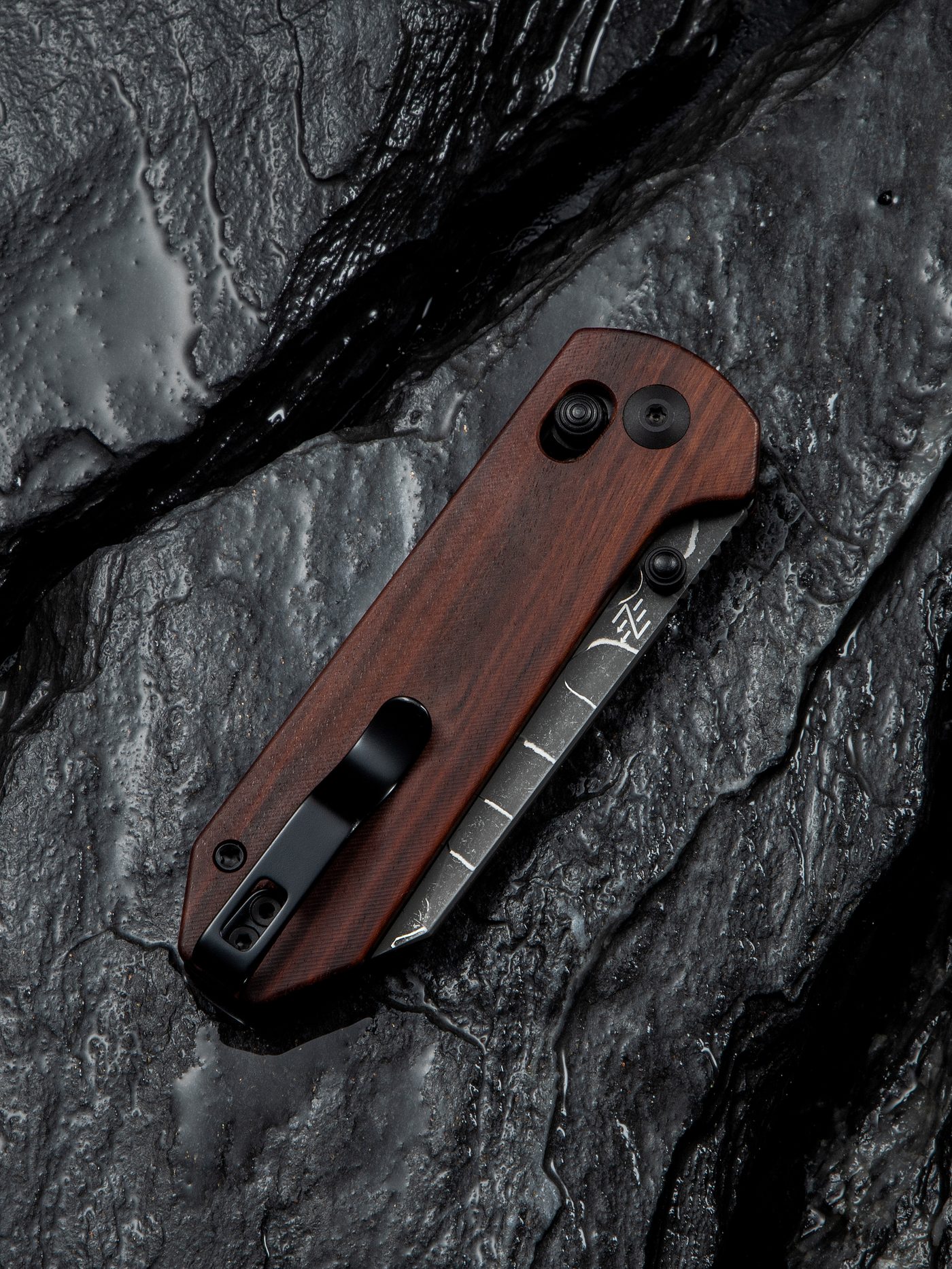
Your kitchen knives are thin. There's a reason for that. The same logic applies to the knife in your pocket, and a growing number of production folders have figured this out.
Consider the knives in your kitchen drawer for a moment. The good chef's knife, the one you actually reach for, is thin behind the edge. The paring knife is thin. The bread knife is thin where it needs to be. Professional kitchen knives are not built like pry bars, and this is not an accident, it's the entire engineering point. A knife's job is to cut things, and thin stock reduces resistance, which makes cutting easier, which is what cutting is for.
Now consider the typical EDC folder. The knife community has spent considerable energy optimizing for steel selection, lock mechanisms, handle materials, and carry geometry, while blade stock thickness has quietly been treated as either a given or a secondary consideration. The result is a market where a significant number of EDC knives carry blade stock in the 3.5–4mm range, fine for hard use, overkill for opening packages, slicing food, cutting cord, and every other task the average carry knife actually encounters in a day's work. The typical EDC user is not chopping through fieldstone. They are opening Amazon boxes and occasionally cutting an apple at lunch. The blade stock optimized for fieldstone is not the blade stock optimized for the apple.
There are real trade-offs to thin stock. A 2mm blade is more prone to snapping under lateral force than a 4mm blade. It's also lighter and more balanced at the tip, which means it doesn't flip open with the satisfying authority of a heavier blade, you'll work harder for the wrist flick if that's your deployment. Thin stock knives reward deliberate use and object to abuse. They are also, in the hands of anyone doing the things pocket knives actually do, meaningfully better cutting tools. Here are ten that make the case well, plus one very expensive reminder that even at the premium tier, the thin stock argument holds.
"Picasso carved with one. Bourdain carried one. It costs fifteen dollars and has been made essentially the same way since 1890. We cannot in good conscience write an article about thin blade stock and leave it out."
The Opinel No. 8 is not here as a joke. It's here because it is the clearest possible illustration of the argument: a knife with a simple ring lock, a beechwood handle, Sandvik 12C27 steel, and blade stock thin enough that the knife slices with an ease that makes significantly more expensive EDC folders feel slightly embarrassing. Bourdain carried one. Generations of French farmers carried one. It costs fifteen dollars at any kitchen supply store and will outcut the vast majority of tactical-looking folders sold at five times the price. The beechwood handle swells when wet, close the blade before submerging it and you'll be fine. Get the stainless version, not carbon steel. Buy one as a benchmark against which to measure everything else on this list.
"Zac Whitmore locked himself in a cabin to design this knife. The 2.2mm blade stock is not an accident, it's the entire premise. The Over Yonder extends it to 3.35\" for those who wanted more blade with the same logic."
The CIVIVI Yonder won Blade Show's Best Buy of the Year in 2024 and the reaction from people who hadn't tried it was: for a sub-$60 folder? The reaction from people who had tried it was: obviously. Zac Whitmore designed a knife around a spey point blade, a geometry that combines a straight-ish edge with some belly and a controlled, non-piercing tip, at 2.2mm stock with a flat grind. The result cuts cardboard, food, rope, and packaging with an ease that registers as different from most EDC folders rather than merely better. It is better, but the difference in feel is more fundamental than a simple upgrade. The crossbar lock is ambidextrous and firm, the action is snappy on ceramic bearings, and the micarta and G10 handle options are genuinely good for the price. The Over Yonder is the same knife with a 3.35" blade at the same 2.2mm thickness, same DNA, more reach. Both are worth knowing.
"The thinnest production titanium EDC folder made. 0.28 inches overall. That's not a blade thickness, that's the entire knife."
The Parallel is where Vosteed introduced the TiSlim concept: Grade 5 titanium handles machined to 0.28" overall thickness. Not the blade, the entire assembled knife. For reference, three sticks of gum stacked together measure roughly 0.315". The Parallel is thinner than that. The reverse tanto blade in 154CM or S35VN is the deliberate design choice that makes the geometry work at this scale, the flat-to-tip profile removes the material needed for a conventional point, keeping the overall cross-section minimal throughout the blade's length. The crossbar lock is ambidextrous and operates smoothly. The wire clip disappears entirely in a pocket. If you've ever wondered whether a knife could be thin enough to genuinely forget you're carrying it, the Parallel is the answer.
"MagnaCut at 2.3mm in a USA-made folder with a crossbar lock. Kershaw looked at the thin stock argument and responded with super steel. Correct response."
The Bel Air is what happens when a major American manufacturer decides to take thin stock seriously and then adds MagnaCut to the conversation. CPM MagnaCut at 2.3mm with a flat grind produces an edge that holds for an unusually long time and slices with the ease you'd expect from the geometry. The DuraLock. Kershaw's crossbar mechanism, is ambidextrous and releases cleanly. Handle options span aluminum Cerakote in several colors through to carbon fiber and micarta, with the carbon fiber version at 2.5oz representing one of the better lightweight USA-made EDC propositions currently available. The Bel Air arrived without significant fanfare and has quietly become one of the more interesting folders in Kershaw's lineup for people who actually use what they carry. At $130 for the base aluminum version it's accessible; the carbon fiber version at $200 is worth the premium if you're going to carry it seriously.
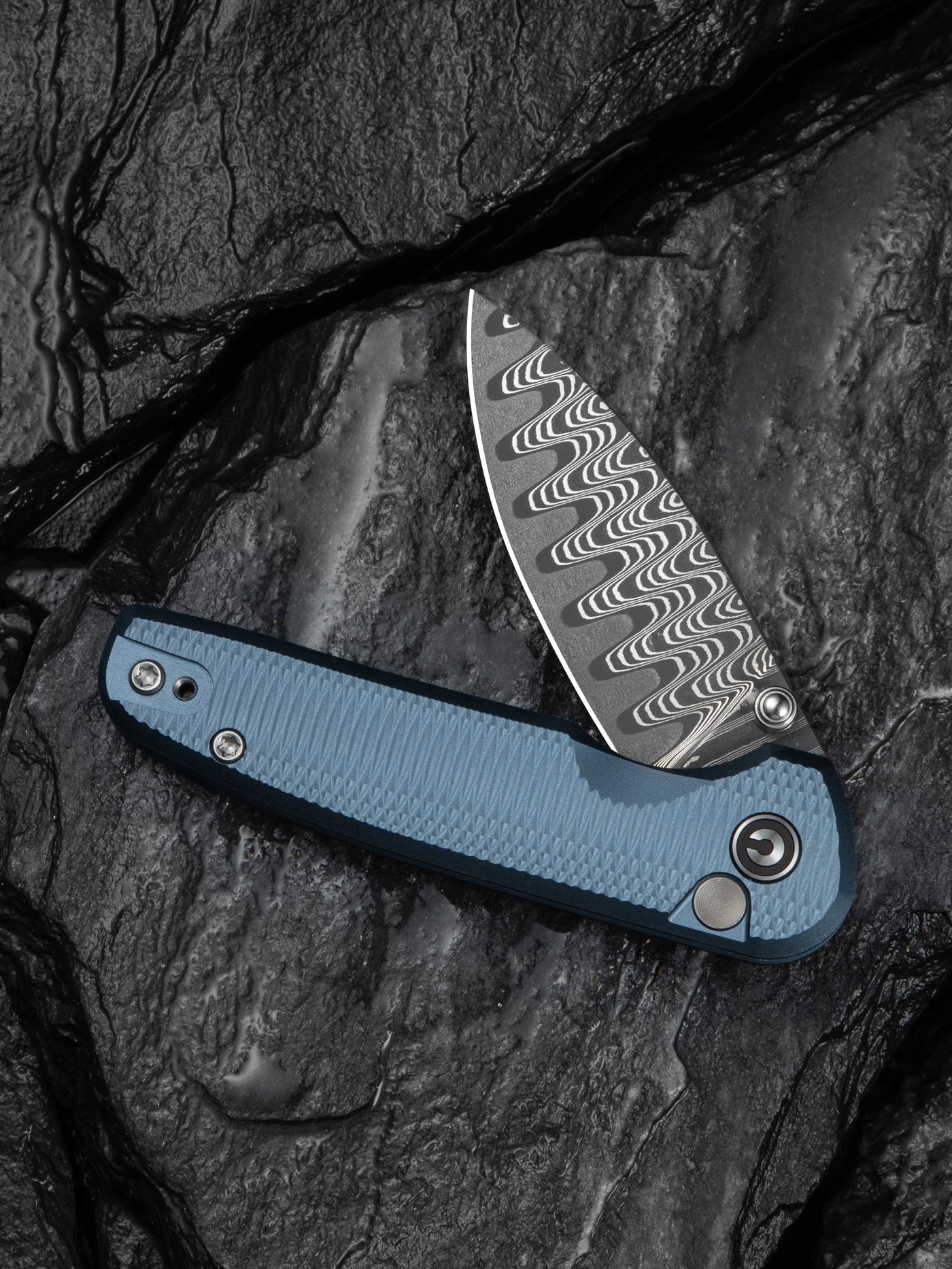
"Three deployment methods, 2.3mm blade stock, and a Damascus option under $100. The Mini Shakan looks like it should cost twice as much and cuts like it knows it."
The Mini Shakan is compact even by 5th pocket standards, 2.48" of blade, 3.5" closed, under two ounces. The ripple-patterned aluminum handle is the visual hook, but the 2.3mm flat-ground stock is what puts it on this list. Nitro-V at $74 is the practical choice: tough, easy to maintain, good corrosion resistance. Damascus at $94 is genuinely beautiful, the kind of Damascus that photographs well and also performs, rather than the kind that's purely decorative. The button lock allows the third deployment method CIVIVI bills: press and flick to open, which works once you've handled it for a few minutes. The caged ceramic bearing pivot makes all three opening methods feel smoother than the price implies. For 5th pocket carry where you want thin stock and don't want to think hard about it, the Mini Shakan is among the more considered options available.
"The Raccoon ergonomics in a titanium knife thinner than three sticks of gum. Vosteed took their most beloved design and asked what it would look like if carry comfort was the primary specification."
The standard Raccoon is an excellent knife. The Raccoon TiSlim is an excellent knife that demonstrates how much of the Raccoon's mass was optional. At 0.315" overall thickness, the same as the Porcupine TiSlim, marginally thicker than the Parallel, it delivers the familiar Raccoon ergonomics in a package that disappears in a pocket in a way the original doesn't quite manage. The blade stock comes in at 2.20mm, flat ground, in 154CM ($135) or S35VN ($175). The 154CM version is the everyday carry choice for most people; the S35VN version is worth the premium if you're serious about carrying one knife for extended periods. The crossbar lock is ambidextrous and smooth. The 3D-milled titanium clip is one of the better carry solutions in the TiSlim family. If you've carried a standard Raccoon and found yourself wishing it was thinner, this is exactly what you were wishing for.
"S90V in a modified wharncliffe with a flat grind at $150. The Cleo is what the thin stock argument looks like when it also has the best possible blade geometry for actual cutting."
The Artisan Cleo makes the case from a different angle. Where the Yonder's spey point has belly, the Cleo's modified wharncliffe has almost none, the edge runs nearly straight from heel to tip, which makes it a pure push-cut and draw-cut instrument. For slicing tasks this is optimal. For piercing it's less useful. For what most people do with a daily carry knife, opening packages, preparing food, cutting cord, it's the shape that requires the least effort per cut and leaves the cleanest result. CPM-S90V holds that edge through weeks of daily carry without complaint, and the button lock keeps fingers clear of the blade path during closing. At $150 for S90V in titanium with a flat grind and a well-designed ergonomic handle, the Cleo is priced below what the combination of materials warrants. The copper version is worth seeing in person if you haven't; it develops a patina over time that makes the knife look considerably more expensive than it was.
"3mm spine stock, thicker than everything else here. The hollow grind brings the edge down thin enough that it doesn't matter. This is the one exception we're allowing."
The Drop Bear Zero doesn't belong on this list by strict blade stock measurement, 3mm is solidly mid-range, not thin. It's here because the hollow grind geometry produces an edge geometry at the cutting surface that functions like thin stock even if the spine tells a different story. The hollow grind removes material behind the edge in a concave arc, which means the knife gets thinner faster as you move toward the cutting surface. In practical use the Drop Bear Zero slices with the efficiency you'd expect from a 2mm flat-ground blade. In practical use it's also considerably more durable under lateral force than a 2mm flat-ground blade. Elmax or M390 in a screwless aluminum handle with Kizer's button liner lock at $120 is a genuinely strong value proposition. The minimalist show side, no visible hardware, is distinctive enough that it reads as considered design rather than stripped-down budget engineering. We're making an exception for the Drop Bear Zero because the result justifies it, even if the methodology is different.
"The TiSlim concept applied to the Porcupine, with the lock upgrade the family needed. S90V at $179 in a 0.315\"-thick titanium folder is a combination that shouldn't exist at this price."
The Porcupine TiSlim is the most recent member of Vosteed's ultra-thin titanium family and the one that makes the most interesting argument. The blade stock is 2.20mm, identical to the Raccoon TiSlim, but the lock type is different: a top liner lock actuated by a button rather than the crossbar lock on the Parallel and Raccoon TiSlim. This matters for daily carry in a specific way. The top liner lock keeps your fingers clear of the blade path during closing, which makes the Porcupine TiSlim the most fidget-friendly and office-appropriate member of the family. The S90V version at $179 deserves a specific mention: S90V in Grade 5 titanium handles at this overall thickness is a material combination that should cost considerably more than it does. It holds an edge through months of light daily use without complaint. The 154CM version at $139 is the more accessible entry and covers every daily cutting task without any meaningful compromise.
"$30. Thin stock. Button lock. AR-RPM9. The knife that makes every other price point on this list feel slightly harder to justify, until you carry both."
The Pyrite-Light is here last because it's the most useful reality check on everything above it. For $30 you get AR-RPM9 steel. CJRB's proprietary spray-formed alloy with genuine corrosion resistance and good edge retention, in 2.3mm stock with a hollow grind, a wharncliffe blade optimized for slicing, and a button lock on a polymer handle that weighs next to nothing. The FRN construction is not a compromise at this price; it's the right material for a daily use knife that will encounter moisture, grit, and the general entropy of being used. The button lock is smooth from the factory. At $30 it's the thin stock entry point that makes the argument without requiring justification. After carrying it for a week, you'll understand why everything else on this list is worth more, and you'll carry both.
"Benchmade took their best-selling knife, stripped it to its bones, and rebuilt it 33% thinner with MagnaCut. The result costs $375 and launches June 2. We mention it because it's the most unambiguous possible endorsement of this article's premise from the most mainstream production brand in the business."
The Bugout Vapyr is not yet shipping. It launches June 2, 2026, with pre-orders open through authorized dealers at $375. That puts it nearly $200 above the standard Grivory Bugout, and the premium covers MagnaCut steel, a Cerakote finish, a machined aluminum frame, a linerless construction that removes the weight and thickness of the steel liners, and a modified AXIS lock with improved geometry. Benchmade says the result is 33% thinner than the standard model and 0.13 ounces lighter, which, on a knife that was already 1.85 ounces, is a meaningful reduction. We include it here not because it's the most practical choice on this list, it isn't, at $375, and it won't ship for six weeks, but because when Benchmade, the brand that has done more than any other to define what a mainstream American EDC folder is, decides the most compelling upgrade to their flagship knife is to make it thinner, that's the thin stock argument winning in the most public forum available. We'll have more to say when it ships.