The blade steel keeps getting better. Are we using it right?
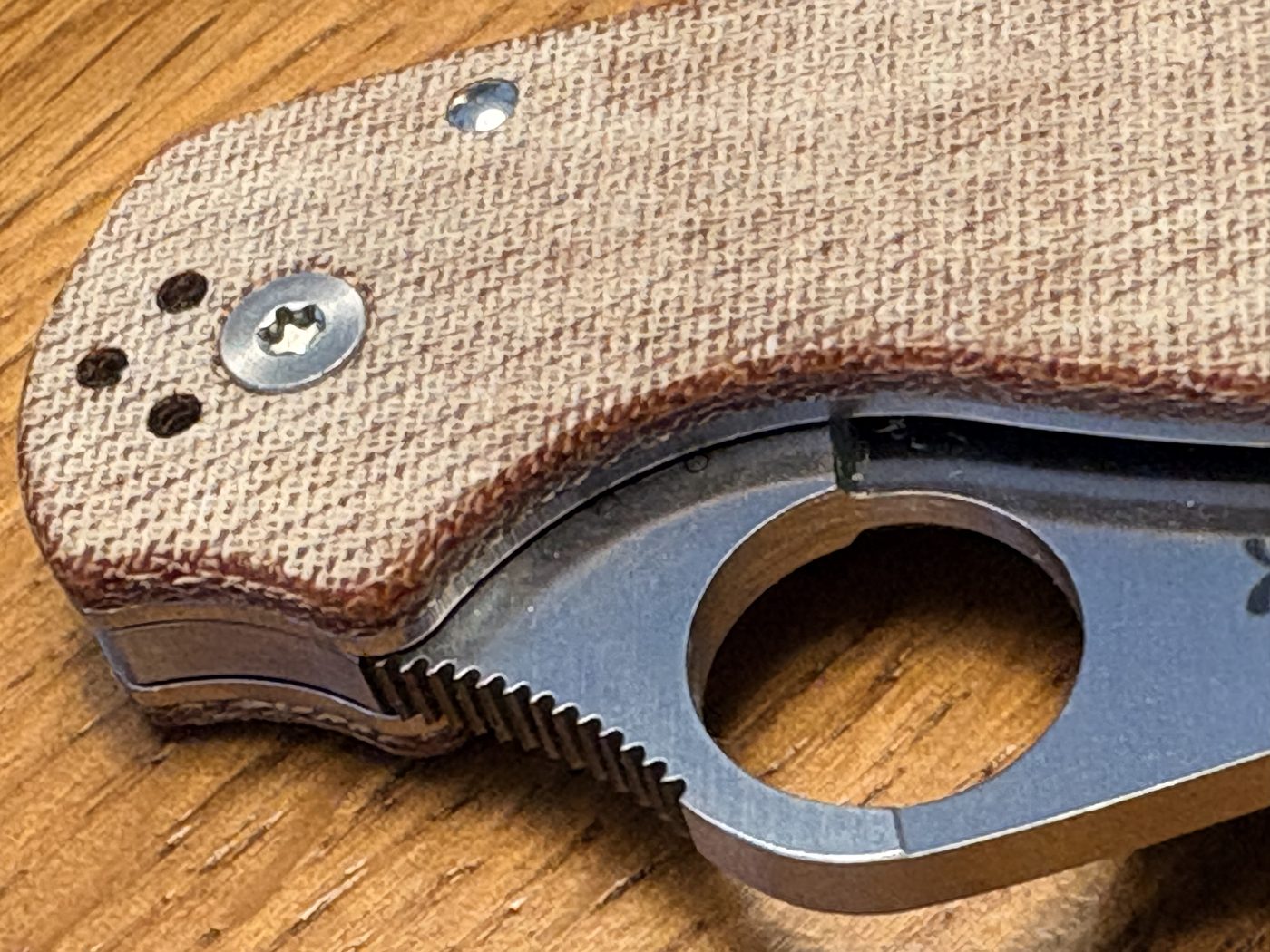
Choosing the right blade steel isn't just a maker's job. Buyers have a role here too. A steel that stays sharp forever isn't automatically a win if the knife it's in was never meant to hold an edge forever.
This conversation is older than most people realize. The tension between a blade that stays sharp and a blade that doesn't break has existed since humans started making knives from anything harder than flint. D2 tool steel became popular in the mid-20th century specifically because it held an edge longer than 440 stainless, which was the dominant production steel of the era. That was the entire argument. Better edge retention, slightly more demanding maintenance. The trade-off was understood, and buyers made informed decisions based on what they were actually doing with the knife.
Somewhere along the way, as powder metallurgy opened up an entirely new tier of blade steel performance, the conversation got murkier. Super steels arrived, the knife press celebrated them, and a quiet assumption took root: more edge retention is always better. It isn't. And the blame here sits equally on makers who spec steel without thinking about the knife it's going into, and on buyers who chase specs without thinking about how they actually use what they carry.
The core trade-off
At the risk of oversimplifying something that metallurgists spend careers on: steels that hold an edge for a very long time tend to do so because they're hard and wear-resistant, and hardness and wear resistance come at the cost of toughness. A tough steel absorbs impacts and lateral stress without chipping or snapping. A wear-resistant steel resists the gradual dulling that comes from cutting. These properties exist on roughly the same spectrum, and moving toward one end means moving away from the other.
This is not a flaw in the steels. It's physics. The question is whether the knife it lives in, and the use case it's designed for, is honest about where on that spectrum it should be.
When a knife with very thin blade stock gets specced with an extremely wear-resistant steel, it's asking a brittle material to handle stress that a tougher steel would shrug off. When a knife designed for light daily cutting gets specced with a tough, relatively soft steel, you're carrying extra sharpening maintenance for no functional reason. Both of these are mismatches, and both happen constantly in the production knife market.
When toughness is the right call
The Flytanium BEEF is one of the better examples of a maker thinking clearly about steel selection across an entire product line. The standard 14C28N version is a hard-use workhorse, a shop knife, a the-task-is-ugly-but-the-knife-shows-up knife. 14C28N is genuinely tough, takes an edge easily, doesn't chip under lateral stress, and comes back quickly when it dulls. For a knife that's going to be used the way the base BEEF is designed to be used, 14C28N isn't a budget compromise. It's the correct answer.
Flytanium also offers the BEEF in D2 for users whose carry skews toward slicing tasks, where the lateral stress argument goes away and longer edge retention starts to matter. But the move that really makes the argument is the S90V option. The BEEF's blade stock is notably chunky for its size, thick enough that S90V's toughness trade-off becomes far less of a concern than it would be on a thinner grind. And for a shop knife specifically, S90V's corrosion resistance is a genuine practical advantage. Oil, coolant, humidity, the general hostility of a shop environment toward anything ferrous. S90V shrugs at all of it. Three steel options, three well-reasoned use cases. That's the brief done right.
One note: stainlessness is its own axis in the steel conversation, and a meaningful one. We've deliberately set it aside in this piece to keep the two-bucket framework clean. It deserves its own treatment, and we'll give it one.
The CIVIVI Mini Shakan tells a similar story from a different angle. Nitro-V on a 2.3mm blade stock is not a downgrade. At that thickness, you need a steel that can handle the flex and stress that thin stock invites. A wear-resistant super steel at that grind geometry would be asking for trouble. Nitro-V's toughness is working for the knife rather than against it.
The same logic applies to any knife with a thin or fine tip, a recurve, a pronounced belly, or any geometry that concentrates stress. Spyderco knows this better than most, and their lineup reflects genuine thought about pairing steel to platform. Our personal PM2 is the Crucarta version in CruWear, which is admittedly a bias, there's something about that combination that just feels right in the hand. If we were buying a PM2 strictly on longevity grounds, Spy27 would be the call. It sits on the tougher end of Spyderco's lineup and on a knife with the PM2's blade geometry and the way most people actually use it, that toughness earns its place. S110V on a PM2 wouldn't be our first, second, or third choice, but if you're curious why, just google "PM2 S110V tip" and let the results do the talking. S110V is a remarkable steel in the right application. We just think the PM2 is better served by something with a bit more give.
My stress dreams, for what it's worth, involve M398 reverse tantos. The combination of one of the most brittle super steels and one of the most stress-concentrating tip geometries in production is the kind of mismatch that keeps people like me up at night. Every steel on this list is excellent. Not every pairing is.
When edge retention is the right call
None of this is an argument against wear-resistant steels. It's an argument for using them where they belong.
The Artisan Cleo in S90V is a knife that earns its steel. The Cleo is a refined, precise EDC folder with a thin modified wharncliffe blade designed for light, controlled cutting. It is not a prying tool. It is not a batoning knife. It is not going to see the kind of lateral torque that would ask anything of S90V's toughness. What it will do is stay sharp through months of daily carry with minimal attention, and S90V's wear resistance is the reason. That edge retention isn't wasted here. The knife was designed for it.
The GEO Knife Belluf in M390 makes the same case at a different form factor. Short, compact, designed as a precise daily cutter. M390 at this geometry is appropriate because the knife isn't going to be abused, and the extended edge retention means you carry it longer between sharpenings. The GiantMouse ACE Biblio in M390 is another example: Italian-made, refined, built for the kind of daily carry that involves cutting tape, fruit, and packaging, not prying open paint cans.
When a knife is specifically designed as a slicer, with appropriate blade stock, geometry, and use case, a wear-resistant super steel isn't overkill. It's correct. The problem is when that same steel gets dropped into a hard-use platform without thinking about what hard use actually demands from a blade.
The middle ground is real, but it isn't free
MagnaCut has earned its reputation as the current best attempt at minimizing the trade-off. Dr. Larrin Thomas designed it specifically to be free from chromium carbides, which gives it toughness approaching CPM 3V levels while maintaining genuine stain resistance and better-than-expected edge retention. It is, by most measures, the most balanced premium production steel currently available.
It is genuinely excellent. But balanced means something specific here. MagnaCut won't hold an edge as long as M390. It won't absorb abuse quite like 3V. If you're choosing it because you want a single knife that handles everything reasonably well without requiring much thought about matching steel to use case, MagnaCut is the answer. If you have specific requirements at either end of the spectrum, a more specialized steel might serve you better. The people who are underwhelmed by MagnaCut's edge retention aren't wrong. They're just reaching for a knife with a longer-wearing steel, and that's a valid choice if their use case calls for it.
Elmax and S45VN occupy similar territory: engineered to do well across the spectrum without being the best at any single attribute. S45VN in particular is a refinement of S35VN that addresses some of its predecessor's brittleness concerns while maintaining comparable edge retention. It's a personal favorite here precisely because it makes the trade-off question easier to answer: for most daily carry scenarios, it's simply correct.
The two buckets, and where things sit
We're going to do a full deep-dive on steel categories soon. But for the purposes of this conversation, here's how we think about it. Two primary camps, with a meaningful middle ground:
All excellent steels. None of them should be dismissed as budget choices. AEB-L and 14C28N are among the toughest production steels available at any price point, and Larrin Thomas of Knife Steel Nerds has noted they sit at the top of the high-toughness group. LC200N adds saltwater-level corrosion resistance to comparable toughness, making it the right call for marine and humid environments. Nitro-V is the workhorse mid-tier steel that quietly does its job in a huge range of production knives.
MagnaCut is the current king of this category and may be the most significant development in production blade steel in a decade. Elmax has been doing this work quietly for years and remains underappreciated. S45VN is the refinement of S35VN that addressed that steel's brittleness concerns, and it's our personal favorite at this tier for daily carry.
These are all remarkable steels and every one of them is the right answer in the right context. S90V is a personal favorite at this tier for its balance of wear resistance and manageable toughness. S110V pushes further into wear resistance at some toughness cost. M390 and 20CV are essentially the same steel from different mills and remain the dominant production super steels for good reason. At the extreme end, Maxamet and CPM-10V will hold an edge longer than almost anything else in production, and they will also punish you for using them incorrectly. The buyer who specs a reverse tanto in M398 and then uses it as a pry bar is not the steel's fault. It's a use case problem.
Knives that get this right
The steel question is ultimately about honesty between maker and buyer. Makers need to spec steel that matches what the knife is actually for. Buyers need to think about what they're actually doing with it. Every steel in these buckets is excellent. None of them are universally correct. The best knife you can own is the one where the material matches the mission, and that's a decision that requires knowing both.