Kizer keeps dropping bangers and we're just trying to keep up
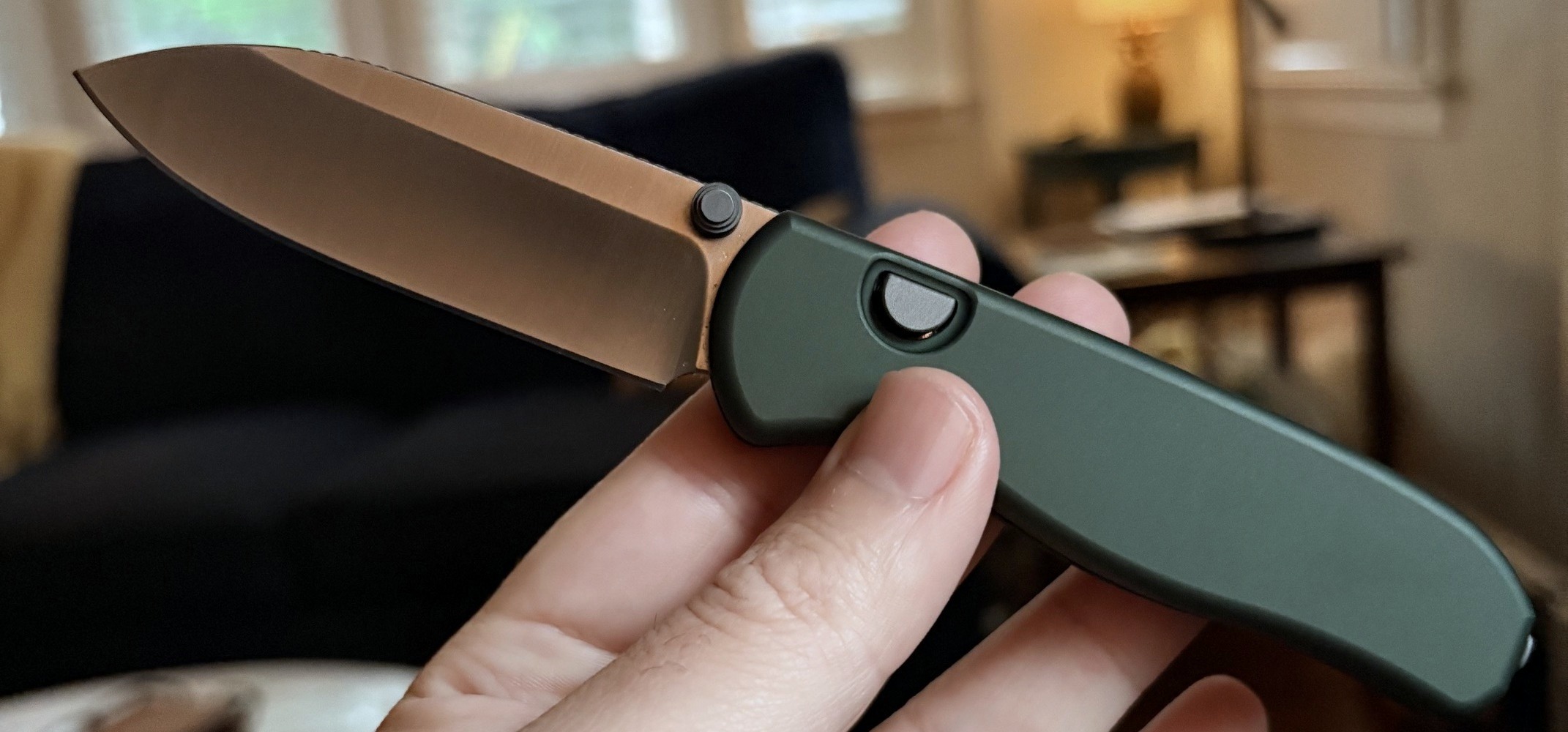
A new Kizer lands what feels like every few weeks, different designer, different steel, different price point, somehow all of them worth paying attention to. At some point you have to wonder if any single brand is doing more interesting work right now. We genuinely don't know the answer.
There's always been a Kizer release cycle, but something has shifted in the last year or so. The cadence has tightened. The design collaborator roster has deepened. The material choices have gotten more deliberate. S45VN appearing where S35VN used to be, Elmax in places that used to see lesser steels, titanium handles at prices that don't feel punitive. You can follow knife forums with a reasonable level of attention and still miss something significant from Kizer because another one dropped while you were reading about the first.
This is an attempt to document the current run. It's not exhaustive. Kizer releases too much for exhaustive, but it covers the pieces that deserve more than a scroll-past.
Johan Jordaan, the Allure and the Shrike
Jordaan's designs have a particular quality, they look like they took longer to draw than they did to build, in the best way. Clean lines, a silhouette that photographs well and carries even better, ergonomics that feel considered rather than accidental. The Allure continues this in titanium and micarta, with S45VN and a front flipper that deploys with the kind of authority you want from a liner lock at this price.
$129.98 for the micarta/titanium version, $149.98 for the blue Vortex Micarta. Either is an excellent carry that would cost significantly more from most American or European manufacturers.
The compact Jordaan entry in this run, and arguably the more interesting one. 2.74" puts it squarely in fifth pocket territory, this is a knife that disappears into a jeans pocket while carrying S45VN and bolstered titanium. The bolster construction gives it a presence and rigidity that aluminum-handled knives at this size typically lack. At 2.34 oz it carries lighter than it looks. The Shrike rewards people who want premium materials in a size that actually works as a daily carry rather than a statement piece.
Jonathan Styles, the Serpentine and the Topsail
Styles' designs have always carried a particular kind of intentionality, the Militaw set a benchmark that a lot of knives since have been implicitly measured against, and the Serpentine earns its place in that lineage. The blade-to-handle transition has a flowing quality that you don't see in production knives at this price, and the Elmax blade in satin or DLC-Ultra is the right steel choice for a knife you want to actually use. Both the thumb hole and front flipper work, which matters more than it sounds, a knife with two openers that are both functional is rarer than it should be.
$179 for the DLC/micarta version, $189 for the satin/carbon fiber. Either is a serious piece for the money.
The crystallized titanium inlays on the Topsail are the visual centerpiece, but the knife is more than the finish. At 3.1" in S45VN with a frame lock, it's a practical carry that happens to look remarkable. The proportions are balanced, not a slim knife trying to look tactical, not a chunky knife trying to look refined, and the dual deployment via front flipper and thumb hole gives you options depending on how you're reaching for it. The entry-level model at $159.99 is the smart buy; the upper tiers are for collectors who want the special material combinations.
Ben Taubert, the Quoll
Ben Taubert is a German designer who doesn't get mentioned as often as Jordaan or Styles in most coverage, which is an oversight the Quoll should correct. The proportions are precise, 2.95" is exactly the right length for a knife that wants to be carried daily rather than just owned, and the crystallized titanium inlays do the same work as on the Topsail: make a functional knife look exceptional without sacrificing the carry experience. At 2.71 oz it's lighter than it appears. The $169.95 entry version is the one to get.
Caleb Waldman, the Snail-Trail
This is the one that makes you do a double-take at the spec sheet. A 0.42" hawkbill blade in M390, a super steel that usually shows up in $150+ folders, in a coin-sized package designed for your keychain or fifth pocket. The detent slip joint mechanism locks the blade via detent rather than a traditional locking mechanism, which keeps the size absolutely minimal. Waldman designed it as a utility piece, and that's exactly what it is: a knife so small you stop noticing it's there until you actually need a blade, at which point it's faster to access than anything in your main pocket.
The AEB-L version at $49.97 is the practical choice. The M390 version at $89.97 with Timascus accents is the collector's version of the same idea. Both are worth having, the choice depends on how much you care about the steel and the finish.
The Drop Bear Zero and the Original 2
The Drop Bear line is one of Kizer's most consistently excellent series. Azo's design has been iterated on carefully over multiple generations and the Zero represents the refined version of the concept. Elmax at this price point is genuinely uncommon; it's a Swedish powder steel with the kind of edge retention and corrosion resistance that usually costs considerably more. The hollow grind makes it a slicer. The button liner lock gives you clean one-handed operation. It's the Drop Bear with better steel and a slightly more focused brief.
The original Original is a beloved Kizer design, and the upgrade to the Clutch Lock and S45VN is the right way to evolve it. The Clutch Lock behaves like a crossbar lock with better fidget energy, the actuation is clean and the lockup is solid. Titanium handles keep weight in check. The reversible deep-carry clip, now fully ambidextrous, is the kind of detail that makes a knife genuinely versatile rather than just theoretically so. If you've been meaning to try the Original and haven't yet, the Original 2 is the version to pick up.
The accessible end. Phoca BD
Not everything in a run this dense needs to be titanium and super steel. The Phoca BD is the accessible entry point into the current Kizer lineup, 14C28N in aluminum handles with a button liner lock for $79.99. That's a solid steel in a clean package at a price that doesn't require a decision tree. If you've been on the edge about trying Kizer and want to do it without committing to $150+, the Phoca is the right starting point. The button liner lock is more fidget-friendly than a plain liner and the deep-carry clip keeps it invisible in the pocket.
The fixed blade end. Whiskey Jack and Area Eight
CPM-10V is a tool steel with edge retention so high it borders on impractical for most users, sharpening it requires diamond or CBN abrasives and patience. On a 2.06" fixed blade that you're using for light daily tasks, that edge retention becomes a feature: you'll sharpen it rarely and it'll keep performing. At $74.99 for a pocket fixed blade in a steel that shows up in custom knives at $400+, the Whiskey Jack fixed is one of the more interesting value propositions in Kizer's current lineup. The Whiskey Jack folder in CPM-10V is equally worth your attention.
The fixed blade Styles designs always feel like they were drawn by someone who actually uses knives outdoors rather than just designs them for photos. The Area Eight is practical in a specific way, sized to bridge compact EDC and capable field knife, AEB-L for toughness and fine-edge stability, flat grind for efficiency. At $59.99 it's one of the better-priced examples of what a thoughtful fixed blade brief looks like when the designer's name means something. Black and green G10 handles and a Kydex sheath included.
The question we keep coming back to: is any single production knife brand doing more interesting work right now than Kizer? The cadence alone would be notable, a new design worth paying attention to landing nearly every month for the better part of a year. But it's not just volume. The designer roster is deeper than it's ever been, the material choices have gotten more deliberate, and the value proposition at nearly every price point remains unusually strong. We genuinely don't have a confident answer to the question. We're just trying to keep up.